Monday, March 23, 2009

Jabiru


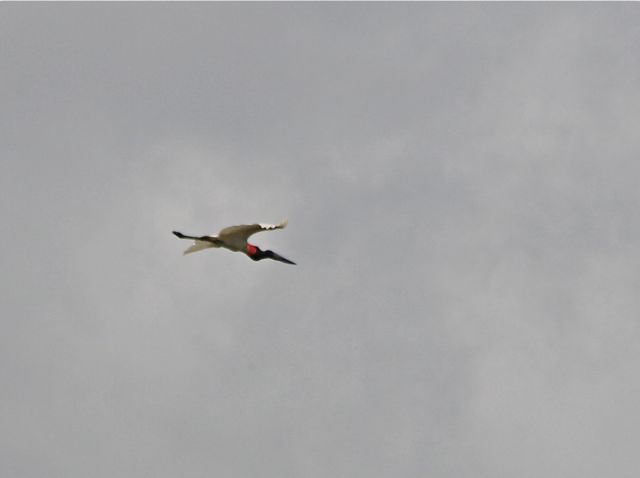
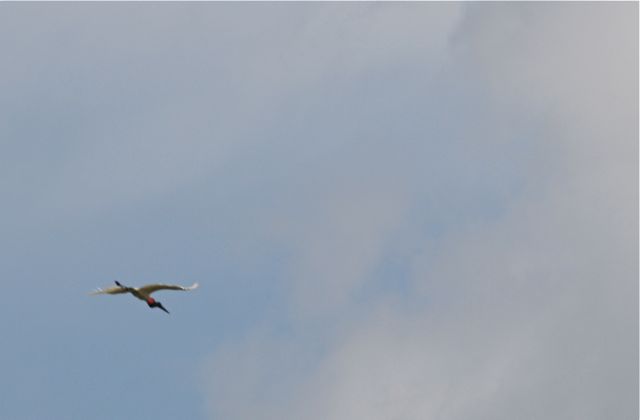
Jabiru! Just the name sends a thrill through any aspiring Neotropical birdwatcher. Though they occasionally show up in Texas as vagrants, you really have to be in the tropics to see this magnificent stork.

The jabiru eats fish, crustaceans, mammals, reptiles, amphibians: whatever it can subdue with its enormous, slightly uptilted bill. That's probably most of the animals it encounters, because this thing is BIG. It is the tallest bird in the Americas, standing nearly five feet, tipping the scales at almost 17 pounds, looking me right in the eye. And I can tell you I would not want a jabiru to look me in the eye at close range. Herons and storks have a disconcerting way of aiming for the eyes of people who tick them off. So I will have no hair-raising tales of patting the jabiru.

I'd only ever had distant and pretty crummy looks at jabirus in Costa Rica. To come to a place where they were reasonably common and easy to see was a great thrill. Guyana thrilled me in so many ways.

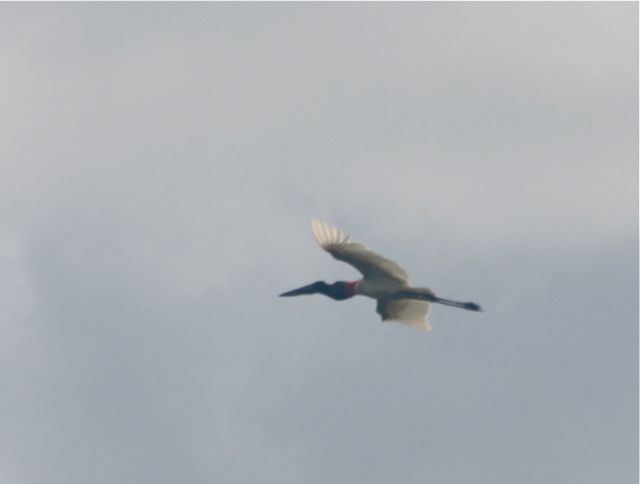
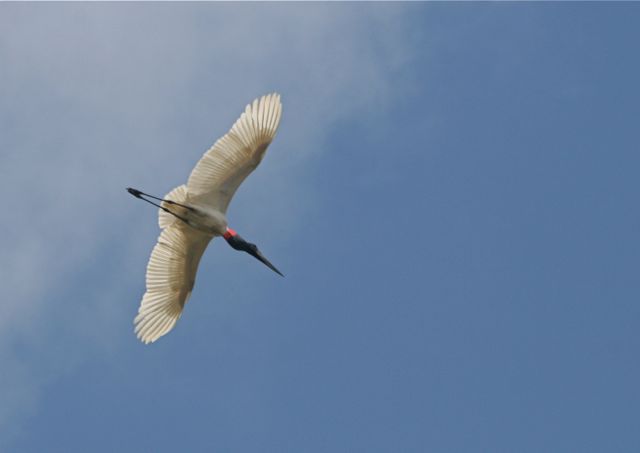
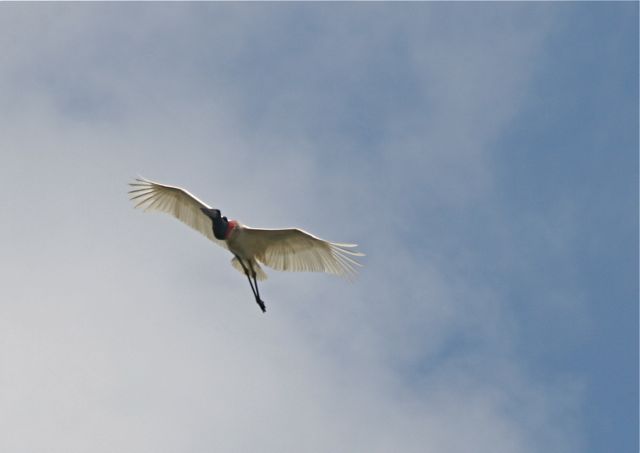
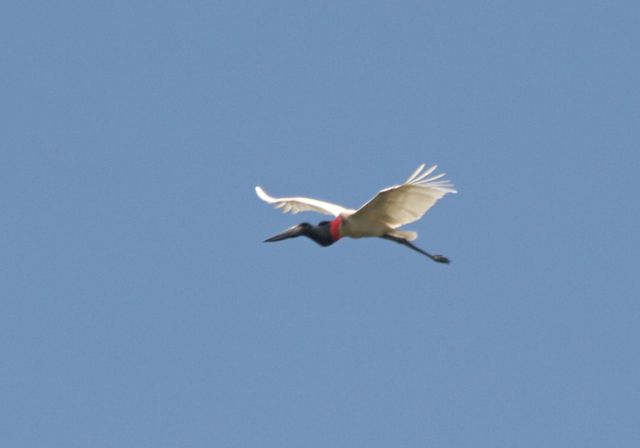
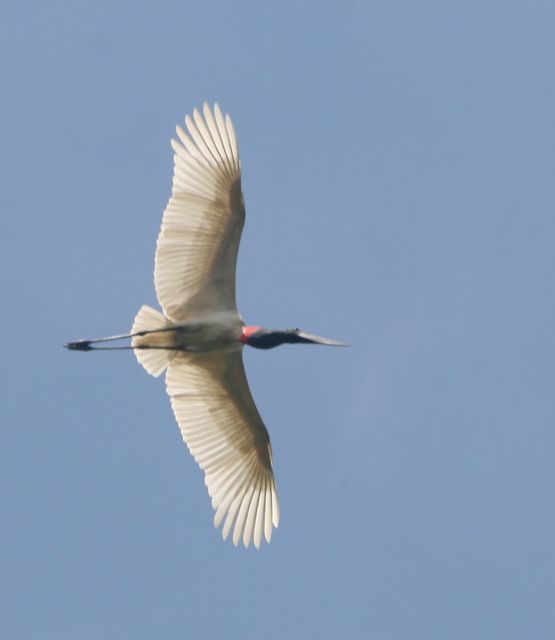
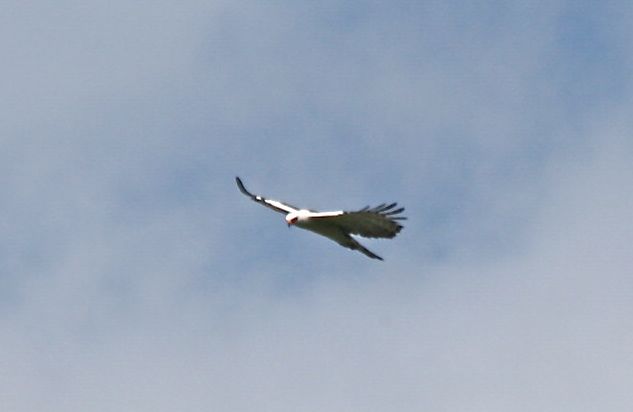
Flying jabirus are distinctive mainly by their absolute hugeosity. Not only that, but their plumage is completely white--no black primaries here. Their feathers must be enormously strong, both to hold their weight and to resist wear without the aid of melanin, the dark pigment that strengthens the wingtips of most white-winged birds.

In flight, jabirus appear very neck-heavy. Its name is a Tupi Indian word meaning "swollen neck." Yeah.Most of the birds that we saw were circling in pairs or even quads, and we witnessed a few really strange neck-throwing displays in flight, where the bird would toss its head over its back, flashing a big red patch at the base. I wish I had a picture of the bird with the head thrown up, but it happened really fast.The display looked aggressive in nature to me, but one never knows. It could just as easily have been a breeding display. I noticed that the base of the neck varied in color; most birds that have such skin coloring are able to deepen the hue by allowing blood to rush to the part. Think turkey heads, which can go from blue to blood-red to snow-white in a few seconds. Whether this is something that is under voluntary control I don't know; it's more likely related to how excited the bird happens to be.

Oh, gosh I love jabirus, and I had a hard time picking my favorite photos. When I am focused on a circling jabiru, I'm very happy that my camera, set on Auto, knows what to do to bring out the detail against a bright sky. Tomorrow, a jabiru nest!

Sunday, March 22, 2009

A Jungle School

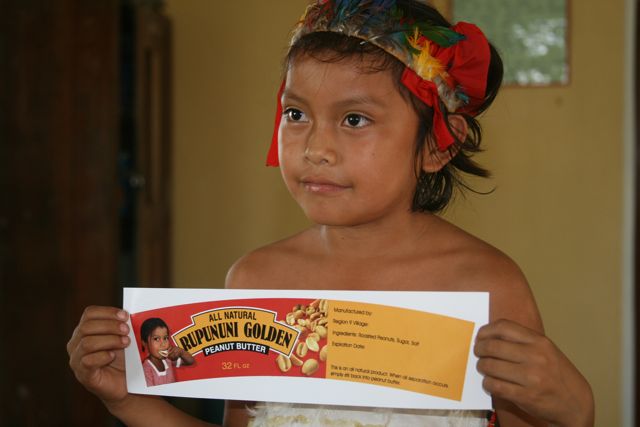
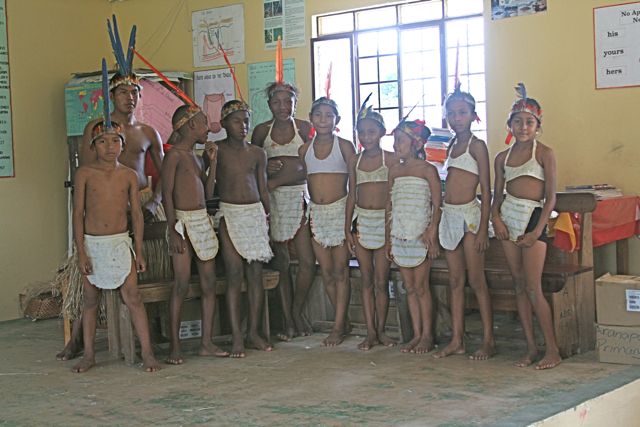
The second Guyanan school we visited, Aranaputa School, sits right next to the peanut factory that makes Rupununi Golden Peanut Butter. Here we met a local celebrity—the little Amerindian girl whose picture graces its label. These children have an innate dignity and self-possessed presence that is remarkable. She wasn't about to get all giddy about it. She just put up with us and our cameras. I wished she'd had the macaw feather headdress on for the peanut butter label shot.
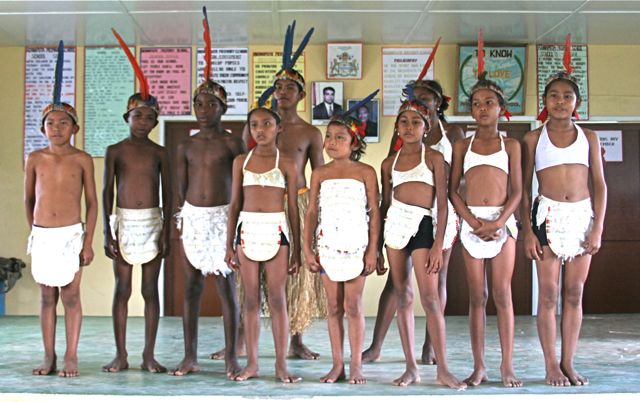
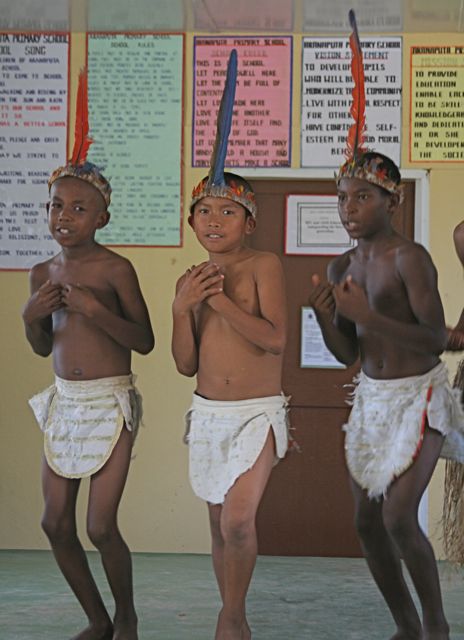
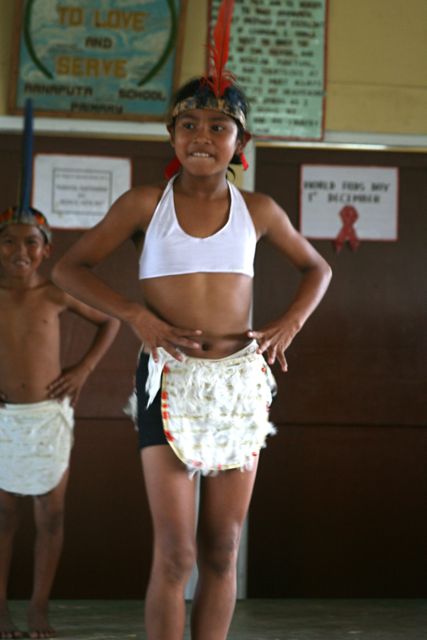
For this visit, the kids were outfitted in what I guess is an approximation of indigenous wear, though we never went deep enough into the interior to find anyone dressed like this, if anyone still is. I'm thinking the Guess T-shirt has probably infiltrated just about everywhere.
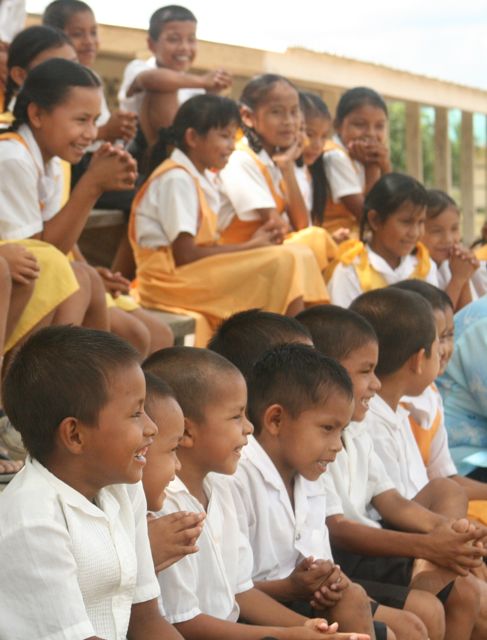
I can’t quite imagine Liam and Phoebe being willing or eager to don what amounts to swim gear and dance and sing before an audience of people from overseas. But these kids launched in without a hint of self-deprecation, irony or embarrassment. It was a beautiful thing to witness.
Scarlet and blue and yellow macaw feathers bristled from their headdresses.
I'd been kid-starved for long enough that I wanted to just grab me one and get some kid hugs.
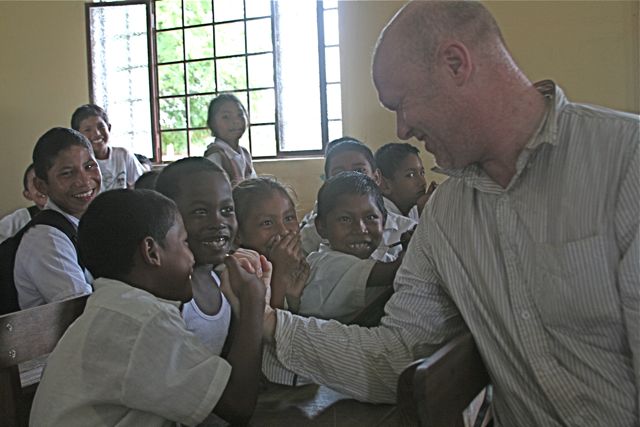
Mike Weedon was missing his little ones, too, so he started some arm wrestling bouts with the kids behind him.
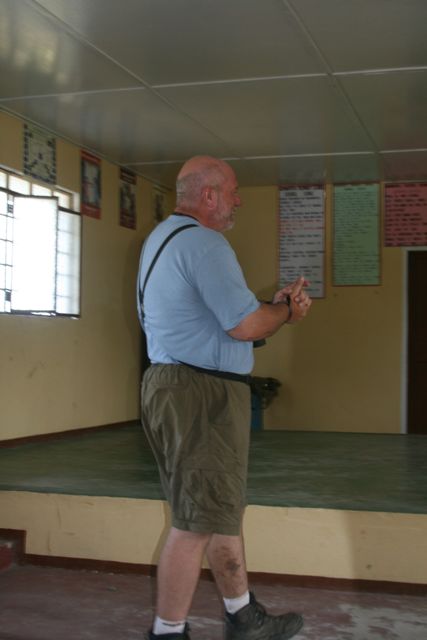
Kevin Loughlin pulled out an eminently portable musical instrument--his hands--and played a few squirky little tunes, filling the open-air school with the music of laughter.
He's especially good on Sousa marches, which lend themselves well to the fruity sounds made by sweaty palms. Yeah! Hearty laughter from all the kids. Way to go, Kevin!


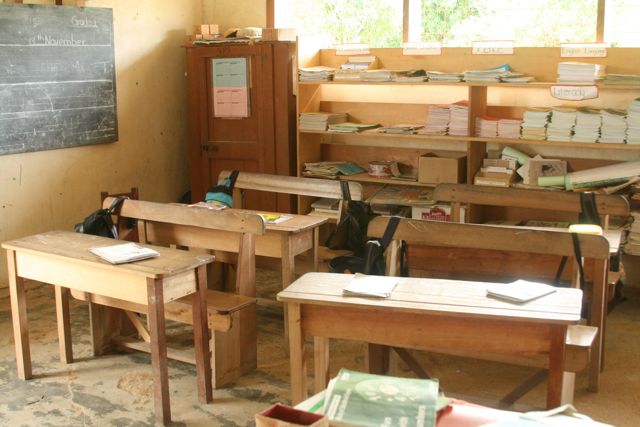
After the concert, we wandered through the school buildings. There were no smartboards here--the big computer screens that enhance my kids' schoolrooms in rural Ohio. There was no electricity.
And yet I entertained the thought that, with a powerline, the Internet and some monitors, the whole wide world could be opened up to these children, too. I thought about them looking up at a smartboard and seeing the same things Liam sees at at his little country elementary school in Ohio.

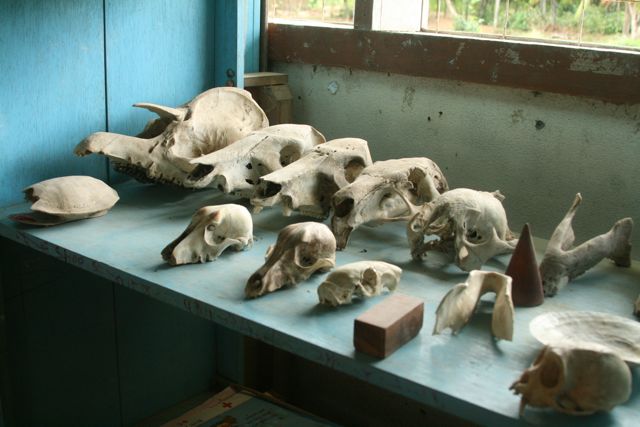
For now, it's little wooden desks, mildewed, curled up books, and animal skulls on a table. And some loving and capable teachers doing their best with what they've got.
From left, back row, there's a lowland tapir (look at that sagittal crest!); a couple of javelinas -wild pigs- (I think); a capybara (world's largest rodent--see the huge incisors?); a round manatee cranium and a possible manatee jaw. Front row: a water turtle, two dogs, an unnamed rodent (probably an agouti); a mystery jawbone, and a monkey, species undetermined. Boneman, feel free to kick in with alternate ID's.

It's a beautiful spring day here, and I'm writing a column for Bird Watcher's Digest that's due tomorrow. Like so many of my published pieces, it was sparked by a thought first aired--and responded to--on this blog. The kernel: Why don't we ask more of our children? Given a choice, they'll stay on the couch. We must lead the way into the woods. If we don't, we can't complain that they're just not interested in nature.

I'm thankful for you, the readers who give me feedback and help me think.

When it's done, I'm going to make a place for the peas and lettuce in the garden--the reward for sitting still long enough to write the piece. At least that's the plan. Given a choice, I go to the garden! I guess that's what deadlines are for.

Thursday, March 19, 2009

Schoolkids of Guyana


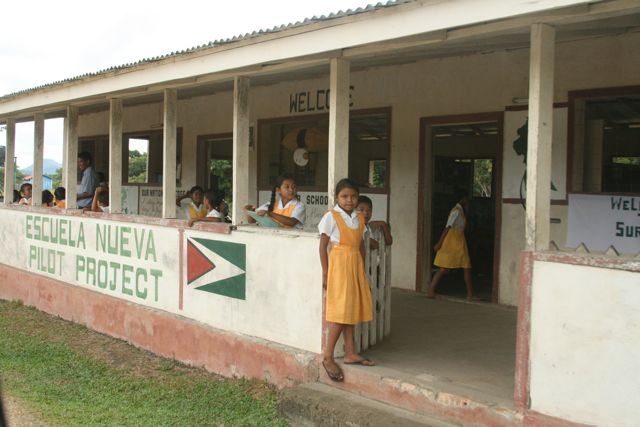
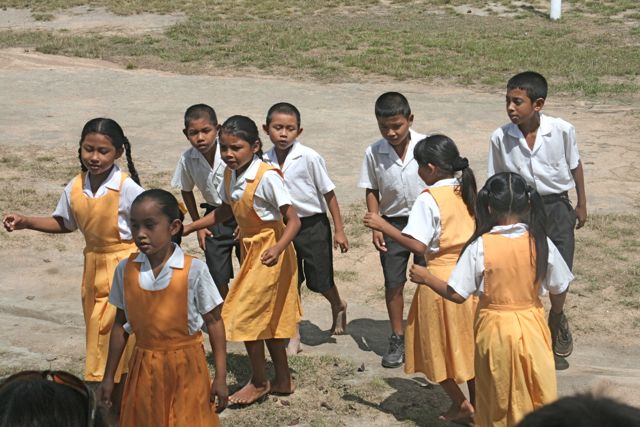
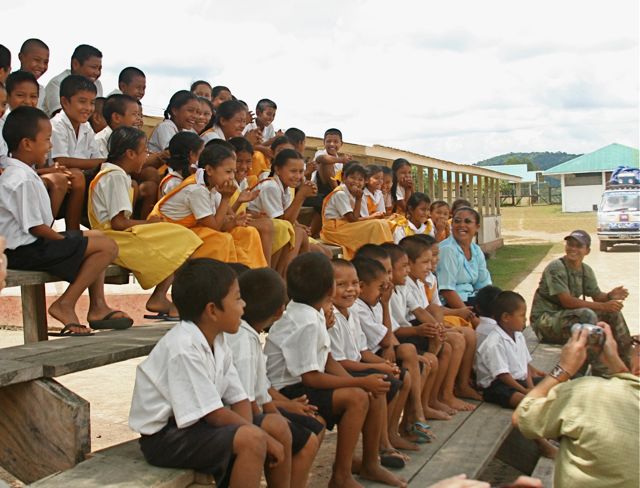
I’ve never been on a press trip that included stops at local elementary schools in the itinerary, but this US AID funded excursion was not a typical fam trip. We visited two schools in one day. We had been scheduled to visit the first one, Escuela Nueva in the AmerIndian village of Aranaputa, the day before, but rain messed up our plans and pushed everything aside. The children had been dressed in indigenous costumes and waiting all day, but we came the next day instead, when they had their regular school uniforms on.

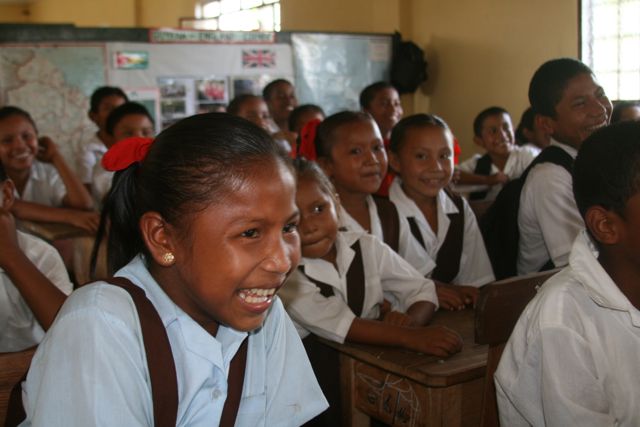
From the moment the children opened their mouths to sing, they had me. If our elementary school choir teacher had been able to coax such angelic melodies out of my kids and their classmates, she’d probably faint on the spot. There was no pretending to sing, no too-cool-for-school inattention. These kids sang, really sang, and they melted my heart. They danced, telling of their traditional agriculture and hunting with their motions.
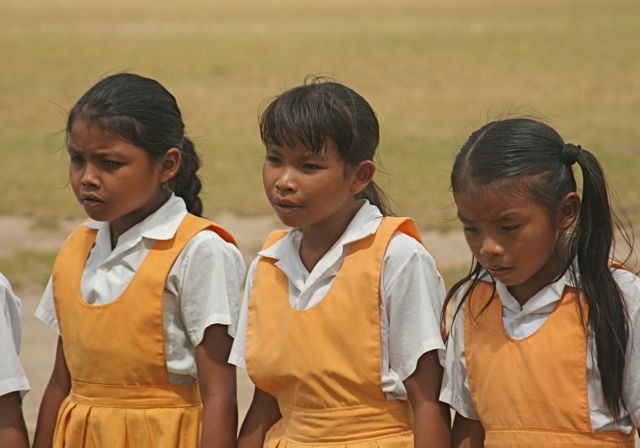
I was transfixed by the timeless beauty of their faces. They sang a song they’d written about their village, the beauty of the sun coming up over the mountains; brown-skinned Amerindians in every house, and tears started rolling down my cheeks. I thought about my kids standing in just such rows, singing Jingle Bells or Sleigh Ride, and wondered what might happen if they were asked to write and perform a song of gratitude to the place they live, the mountains and sky and community they enjoy. It's not that they couldn't do it, and do it well. Thing is, they've never been asked.

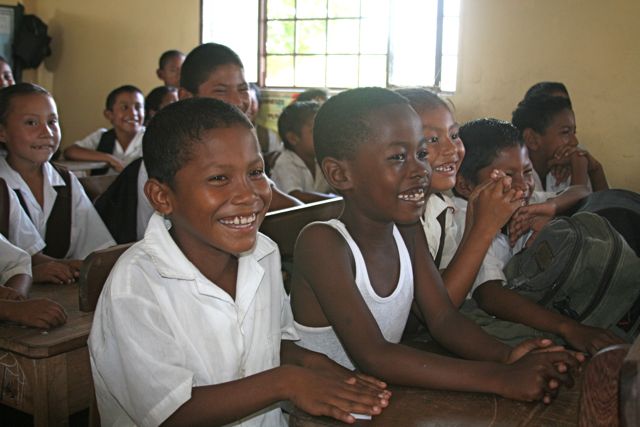
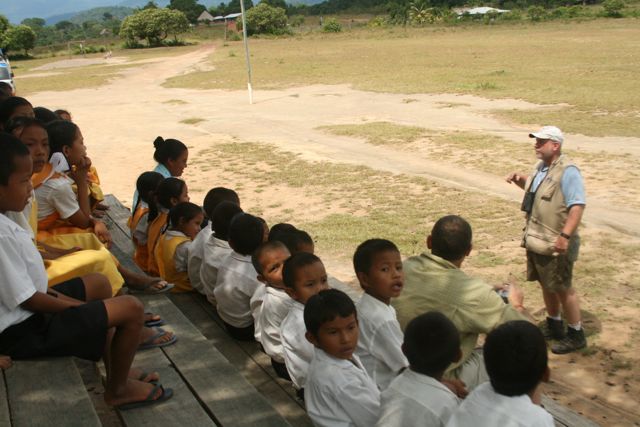
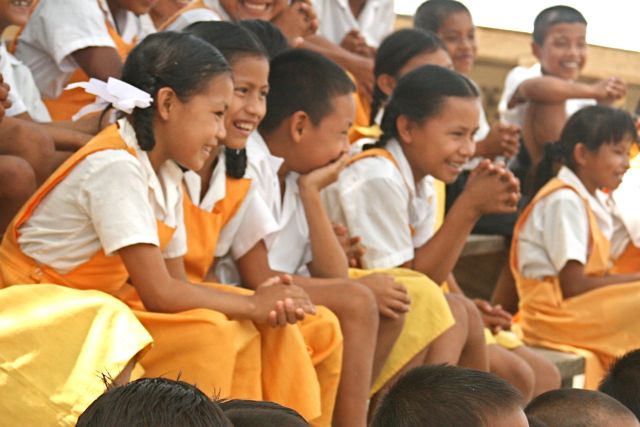
Kevin Loughlin wanted to give something back, because that’s the way he rolls. So he got up and showed them his special talent—playing a tune on his hands, squeezing little raspberry noises out of his palms in a recognizable and quite melodic series of tunes. The kids had never seen anyone do that before, and they cracked up.

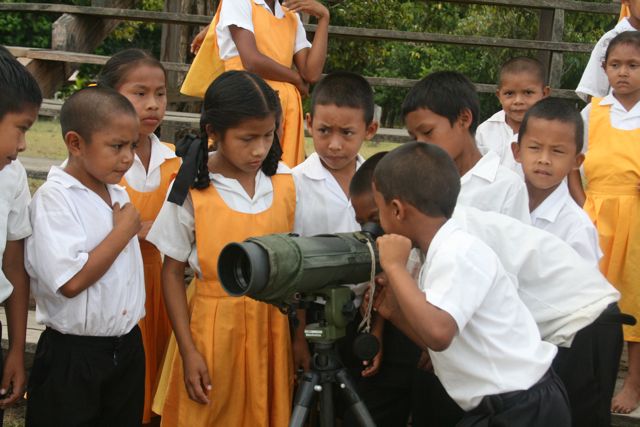
Mike Weedon set up his scope for them to look through, and I sang them an Irish song, wishing I’d brought my pennywhistle.I'll never leave home without it from now on.

Very excited about a Swinging Orangutangs engagement this coming Friday (Ack! Tomorrow!) at the Marietta Brewing Company on Front Street here in Marietta, Ohio. Lots of friends coming, including Jimmy and Paula, and we're planning to coax Jimmy Clinton and his mandolin up on stage. We had a rehearsal last night, in which Vinnie came up with a bizarre German drinking song to which Jess added operatic trills and flourishes, and I laughed so much my stomach still aches. It ought to be a fit opener for the second set. Like my dad always said about raising kids: You gotta keep 'em thinking.

Tuesday, March 17, 2009

Giant Otters on NPR


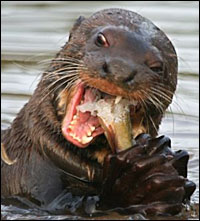
I'll be on All Things Considered this evening March 17, 2009, talking about getting bitten by an Amazon Giant Otter. I enjoyed everything leading up to the actual bite.
It should air near the end of the show; i.e., between 5:30 and 6 pm. Eastern time.
If you miss the broadcast, you can listen after 7 pm Eastern here.
You can also go to npr.org and leave a comment there, to counterbalance all the people who are sure to write in, hopping mad, to tell me what an idiot I must be to pet an otter.
OK, now scroll down to read today's post about a peanut butter factory. It's a big ol' goofy world, in'it?

Peanut Butter Factory


With all the flap about peanut butter going on here, I thought it would be fun to see a real community peanut butter factory, Guyana style. The Guyanan climate is beautifully suited to cultivation of the peanut, which after all was brought over from Africa, and we’ve seen the congruencies between Guyana and Africa. I think that peanut plants must be gluttons for punishment, standing out in the Guyanan heat all day.

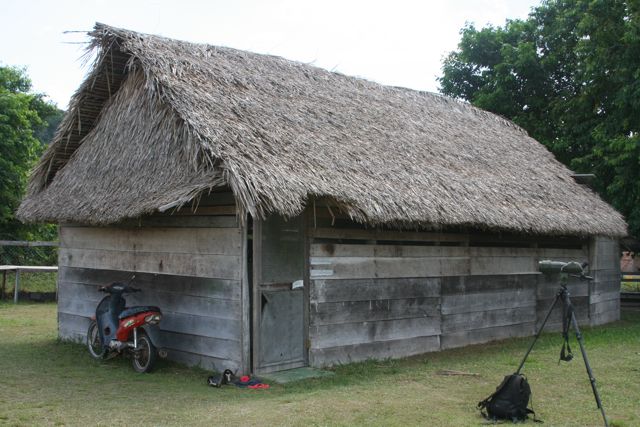
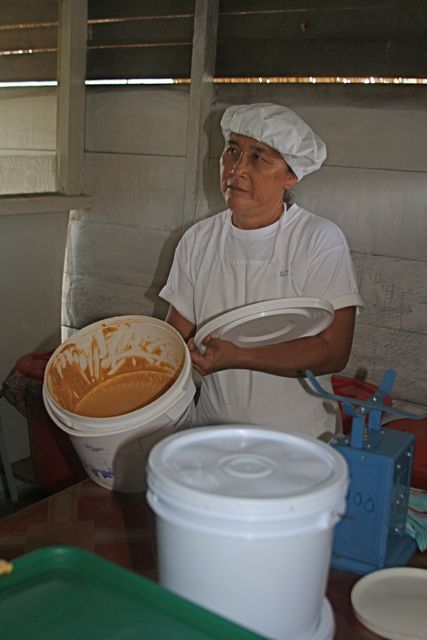
Here’s the factory. It’s modest, but as clean as an open-air peanut butter factory can be. Is it bug or rodent-proof? No. Nothing in Guyana really seems to be. But it’s a tight ship, and we were all given paper berets to wear, so I’m pretty sure the peanut butter has no Zick hair in it. Definitely cleaner than the Peanut Corporation of America.

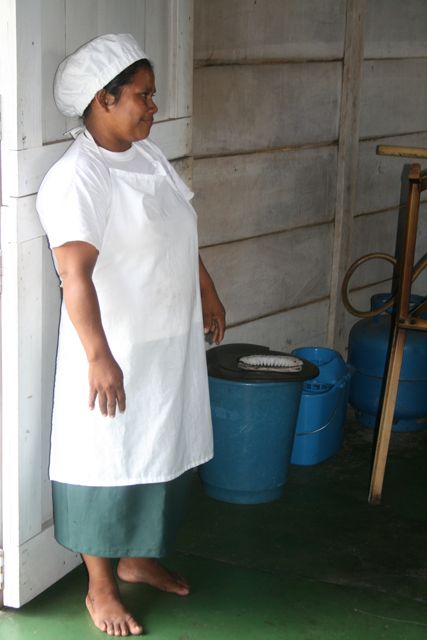
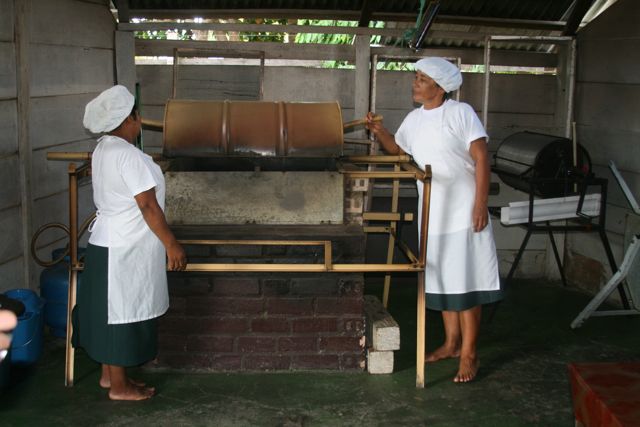
Locally grown peanuts are brought in burlap sacks to this facility, where they are put in the roaster, an oil drum that’s slowly rotated over a gas flame while the peanuts inside spin and cook evenly. You might want to admire the beautifully muscled arms of the two women who work in the peanut factory at this point, because they have to turn the thing for a couple of hours for each batch of peanuts to get cooked.

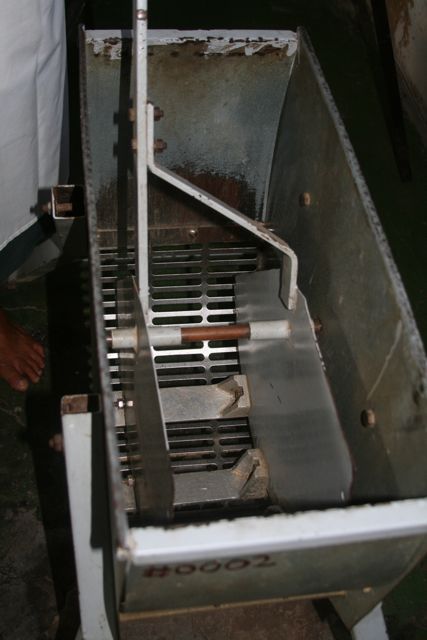
This is the sheller, which separates nut from shell. I think there might be a fan at some point, which blows shell bits off the nuts.
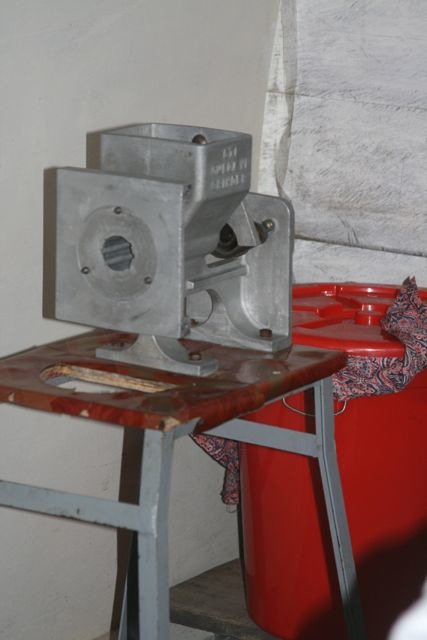
All the peanuts are sent through this little grinder, yielding the most wonderful all-natural hand-made peanut butter. We were given little samples, but I felt like digging my hand into the joint compound bucket and sticking it in my mouth. I wuz hongry, and it were good.


It was humbling to see this operation, the pride and care that goes into every batch, and to think that these two women provide all the labor, every step along the way, to make Rupununi Golden Peanut Butter.
I tried to imagine the FDA allowing such an operation in the States and couldn't. There would be so many regulatory roadblocks thrown in the way that peanut-based food production would be left soley to the big outfits, which, we're assured, handle our food in a much cleaner, safer way. We've seen how well that works, again and again and again. Give me my Farmer's Market, the armpower of two barefoot women, and Rupununi Golden Peanut Butter over the mass produced stuff, any day.

Happy St. Patrick's Day! My Irish half (County Tyrone) came out on a quiet, dark bus in Honduras. We had two hours left of a six-hour bus ride ahead of us, and it was getting dark fast. Everyone was exhausted and just wanted to get some dinner and go to bed. Corey said, "Maybe it's time to strike up a chorus of '99 Bottles." I said, "I've got a better idea," and rummaged around in my suitcase for my nickel-plated Oak pennywhistle. I played for two solid hours without repeating a tune, dredging up music from more than thirty years of picking up Irish tunes. I've forgotten the names of many of them, in the true tradition, but I remember the music. Man, that was fun.

Bill of the Birds is back from the Phils, jetlagged to the max, but we started St. Patrick's Day with a mini-hooley around the kitchen table, working out some acoustic music for the Swinging Orangutangs' next engagement, this coming Friday, March 20, at the Marietta Brewing Company, 167 Front Street, Marietta, Ohio.

Music doesn't take energy. It gives it. Ideally. With the possible exception of load-in, load-out, setup, rehearsal, and next-day wastage.

Monday, March 16, 2009

The Road to Iwokrama

It was hard to leave Atta Tower Camp, gateway to the massive Iwokrama Reserve. It had rained--a true tropical downpour--since the night before. And wouldn't you know, that was the one night we slept (well, "slept" is not exactly what most of us did) all hanging in rows of hammocks in an open-air shelter. Hoping to minimize exposure to snoring (I'm a ridiculously light and intolerant "sleeper,") I was on one end, just a couple of feet from a continuous sheet of water, and all my gear was there, too. That was the night my Mac PowerBook gave up the ghost for the first of many times (temporarily, thank goodness). Essentially, it drowned that night. Now, almost four months later, it's still giving me trouble with unannounced shutdowns, and it's on its way to the Mac Hospital for what will probably amount to a new motherboard or something. Under warranty. Sometimes computers crap out while still under warranty. Sometimes. It had never happened to me, but sometimes you get lucky, if drowning your computer, putting up with spontaneous shutdowns, and being without it for a week constitutes getting lucky.

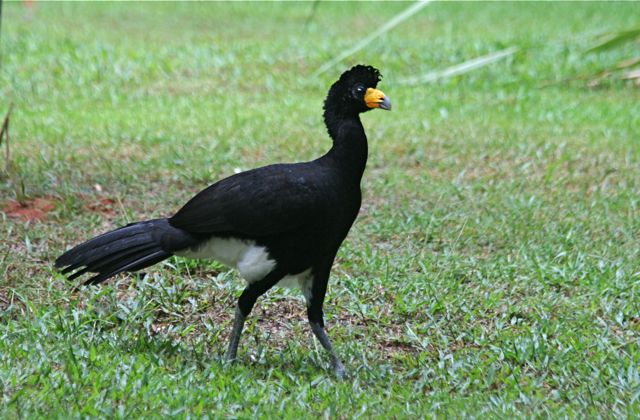
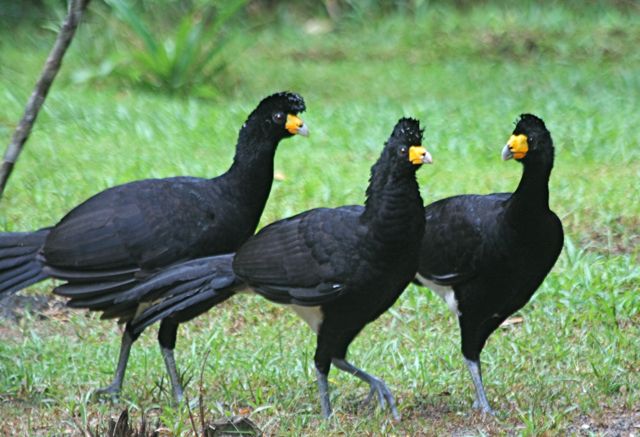
But wouldn't you know, the morning we were to leave the sun finally came out and purple-throated fruitcrows and Guianian red-cotingas came out to forage right around camp, but so high in the trees that I hadn't a prayer of a photograph. I was just stunned. Meanwhile, these crested currassows were spooking around the grounds, hoping the staff would put some more boiled rice out for their breakfast.
I think that's Boss Currassow in the middle. They have the Little Richard marcel 'do.
Currassows are cracids, like chachalacas and guans. They are the loveliest birds, but are unfortunately delicious, and cracids as a rule are really hard to find because wherever they occur throughout Latin America they get shot and eaten. Only in protected spots like national parks or archaeological sites do cracids become comfortable around people, so you have to seek out those places. I spent six months in Amazonian Brazil when I was in college, but didn't see my first currassow (a lovely pair of Greats) until Tikal, Guatemala, only three years ago. So these crested currassows were a tremendous treat to watch as they minced around camp.

It was time to hit the road again, so we bid farewell to the cotingas and cracids and climbed into trucks for transport to our next destination, Iwokrama Lodge. We'd take the road for awhile and then take boats on the Issequibo River. I opted to ride in the back of a pickup, standing up, because I wanted to see more birds. I saw a lot of birds, but also got pretty badly dehydrated in the heat and wind, as we traveled for many hours under the hot sun.

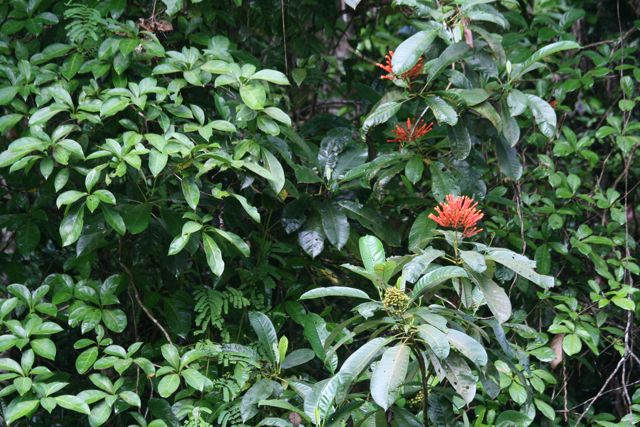
There were the loveliest trees growing all along the road, with great candelabras of gorgeous red flowers.
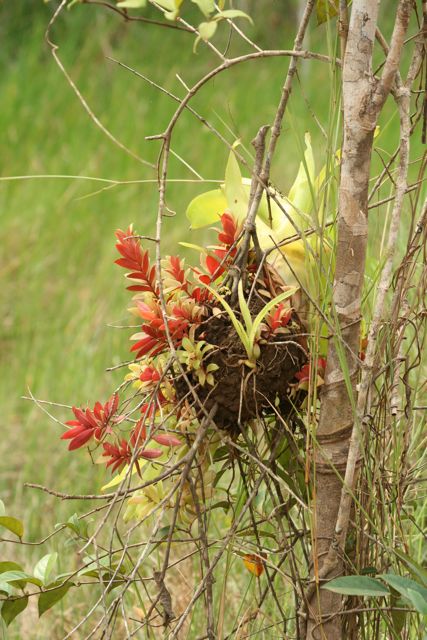
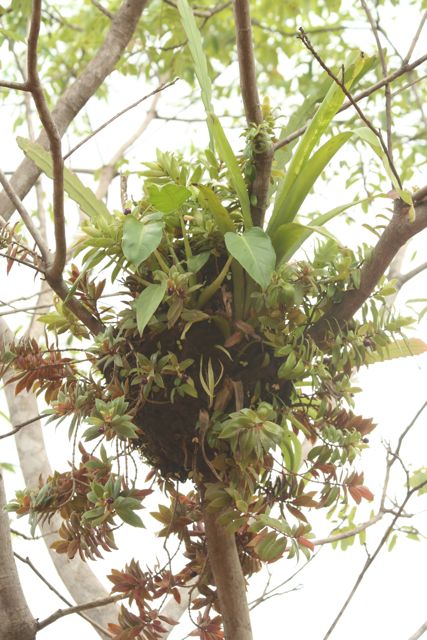
There were little trees, each bearing a natural hanging basket of bromeliads, sedums, philodendrons, orchids, cereuses, and who knows what all else. Nature is the best floral designer.

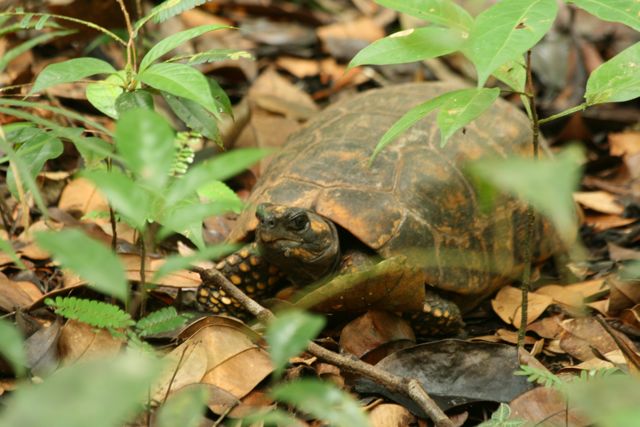
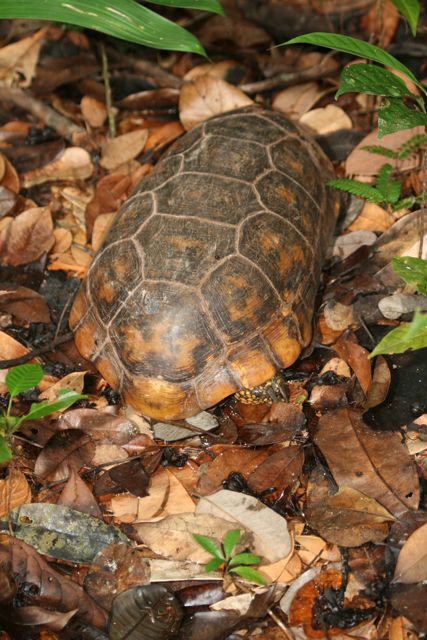
There was an enormous yellow-footed tortoise, like a boxy on steroids.
He was the size of a small watermelon, very Galapagoan.
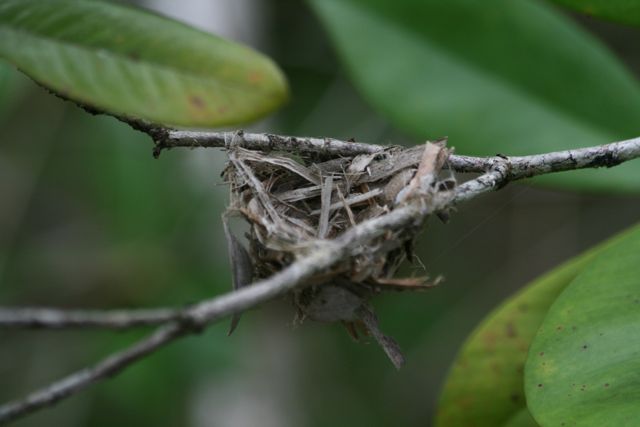
There was the tiny--I mean teeny tiny, eensy-weensy slinglike nest of a white-chinned sapphire hummingbird, or at least that was guide Ron Allicock's guess as to who might have built it. Charmed, I'm sure.
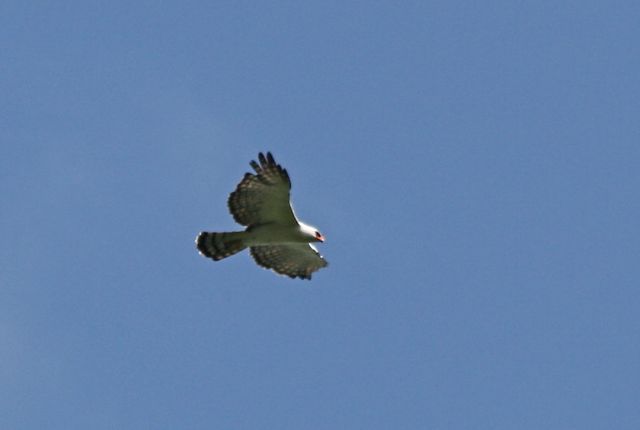
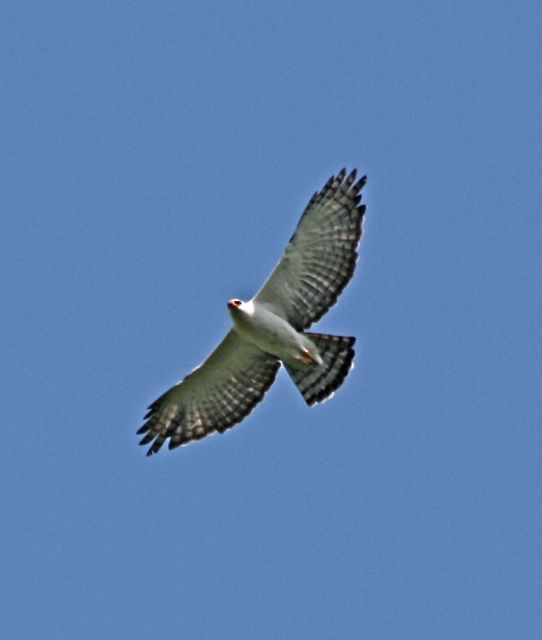
High overhead, a black and white hawk eagle soared and circled. Ahhhh. You beautiful, beautiful thing.
and, finally,
It was a cracking big stunner of a bird, clean and crisp in its markings, out there circling under the baking sun, looking down on us in our birding truck.

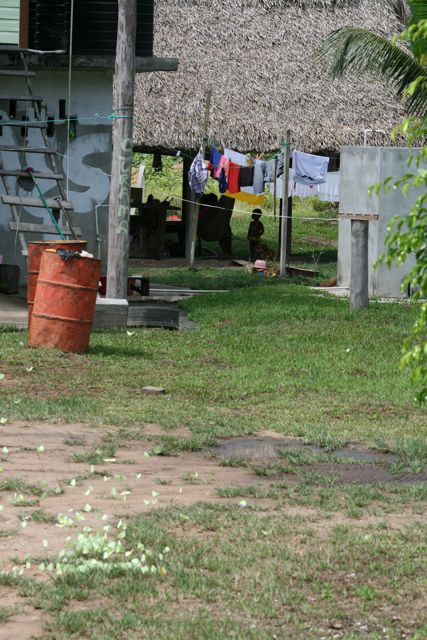
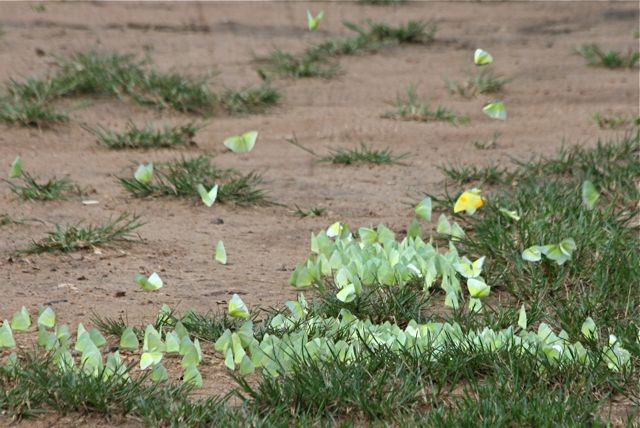
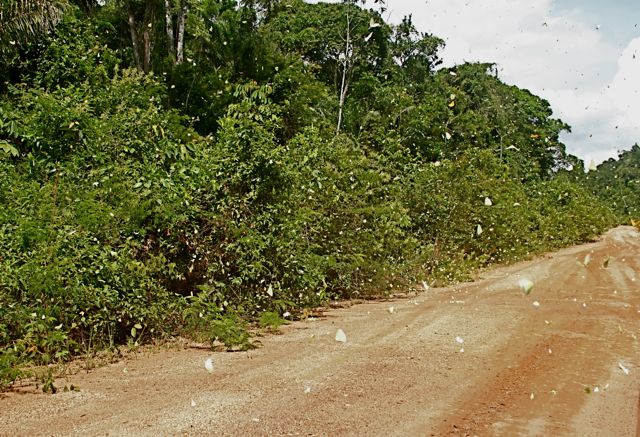
And then there were the butterflies. Big sulfurs, moving in tremendous flocks along the road for as long as we drove, and we drove all day. Try as I did, I couldn't make sense of their movements; they didn't seem to be migrating in any one direction the way monarchs do. They just seemed to be chasing each other back and forth. Here's a flock, puddling in a yard.
Mostly, they are greenish, with some bright yellow and a very few bright orange.
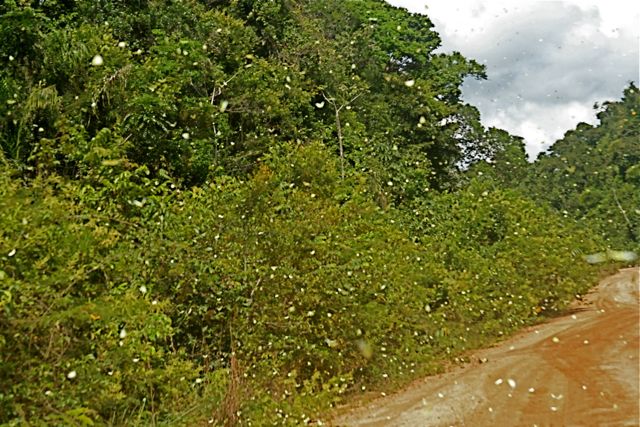
When you are in the back of an open truck, standing facing into the wind, it is like being in a blizzard, with each snowflake a large butterfly. Yes, they hit you in the face, very hard, and it hurts like crazy.
But it was worth it to be in a butterfly snowstorm.
This was more butterflies than I have seen in my life until now, more butterflies than I expect to see for the rest of my entire life. I cannot convey what it was like to be in a blizzard of butterflies, virtually all day, unable to escape being hit by them, just as you cannot dodge the snowflakes.

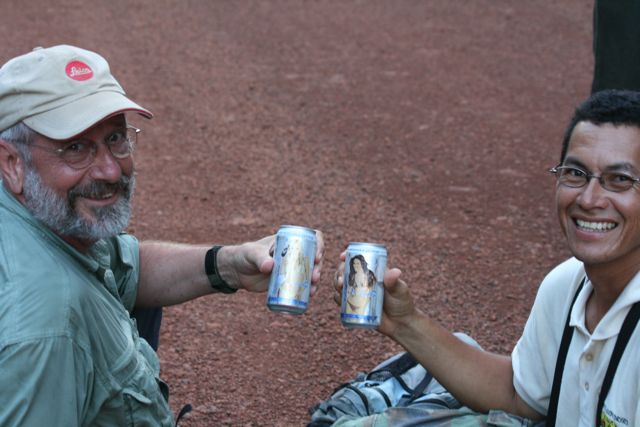
At the end of the day we packed some beers, each conveniently labeled with a different fancy looking bikini 'ho,
something Terry Moore and Ron Allicock seemed to appreciate more than Judy, Judy, Erica and I did.
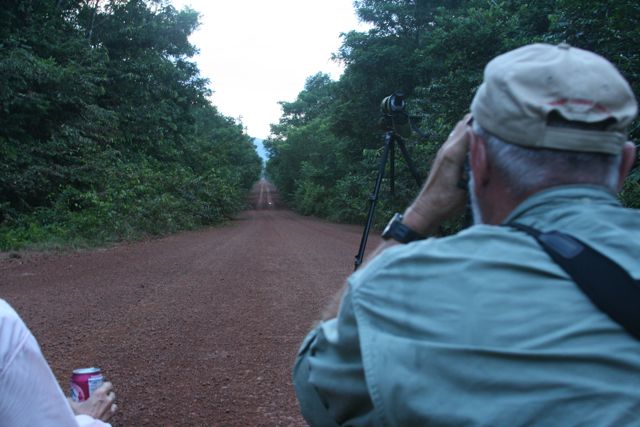
We watched until dark for a jaguar to cross the road, but none did. That's how jaguars usually roll. This is the only road between Guyana and Brazil's northeast, and we sat on it for a couple of hours and never had to get up for a truck. May it ever be thus, though I know it won't.