Thursday, March 5, 2009

Other Vultures

The savannas around Rockview Lodge offer really spectacular raptor viewing; I've posted about this earlier.

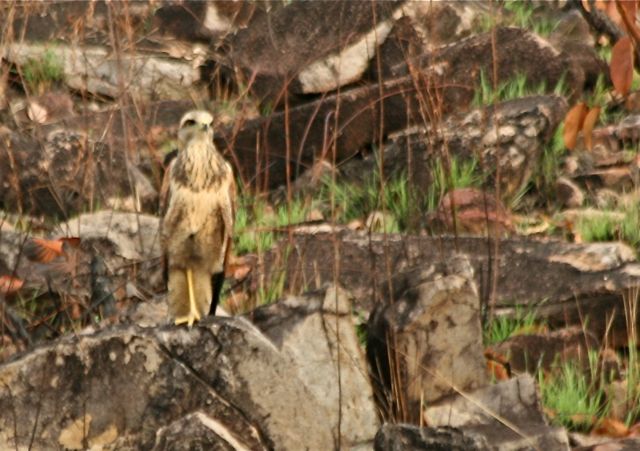
A young savanna hawk pulls up its left foot and rests on a boulder.
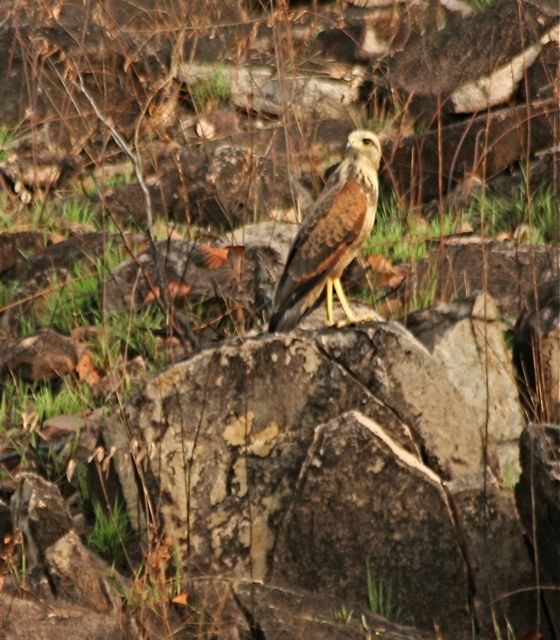
He shows me his bright chestnut shoulder
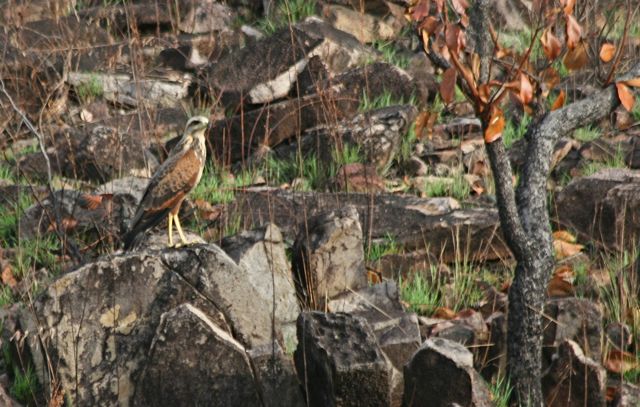
and blends beautifully into the overall scene.
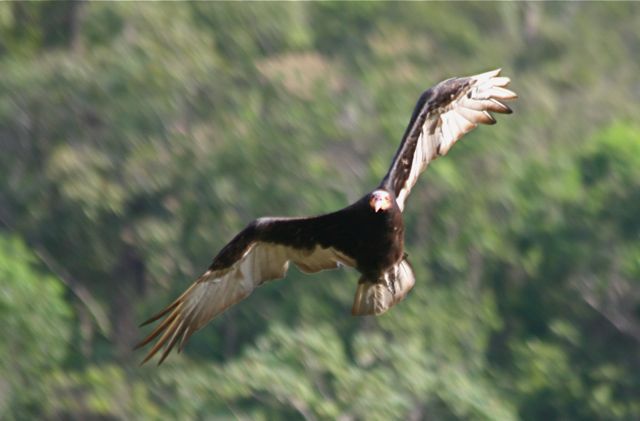
Overhead, large vultures coursed and cris-crossed. These are lesser yellow-headed vultures, Cathartes burrovianus. They're really gorgeous birds, their almost jet-black bodies contrasting nicely with silver underwings and tail.
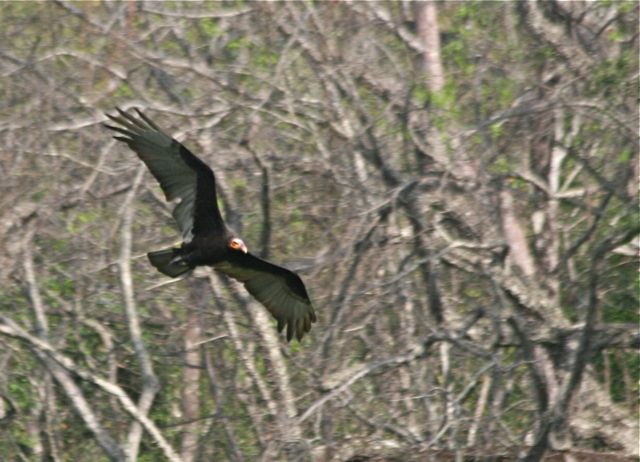

Close up, the head is a livid orange with tangerine and blue zones. I couldn't get close, but you know I wanted to. If you use your imagination you can see the blue forehead on this bird, photographed over a marsh just outside of Georgetown.
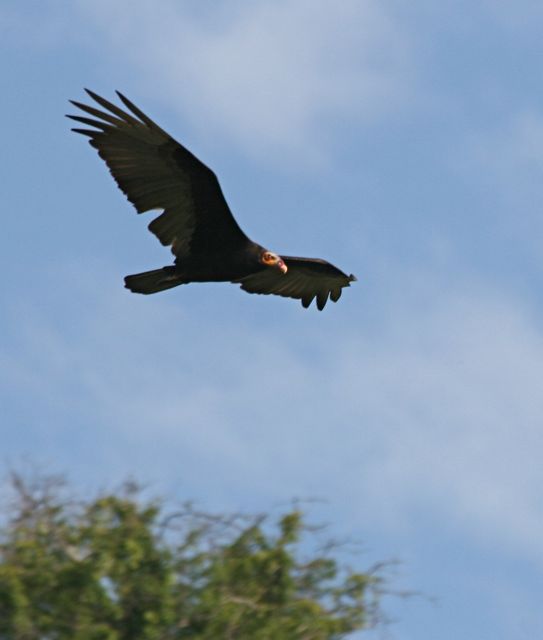
When this bird landed, I got a chance to snag some photos of its overall proportions--very long-winged--and with an odd-looking Roman-nosed head.The lesser yellow-headed vulture is a subtly different bird from our turkey vulture, being overall flat black without the golden-brown feather edgings and mottling seen on the turkey vulture (which give it its species name, aura). The Roman profile and livid orange and blue head coloration of C. burrovianus further serve to set it off.
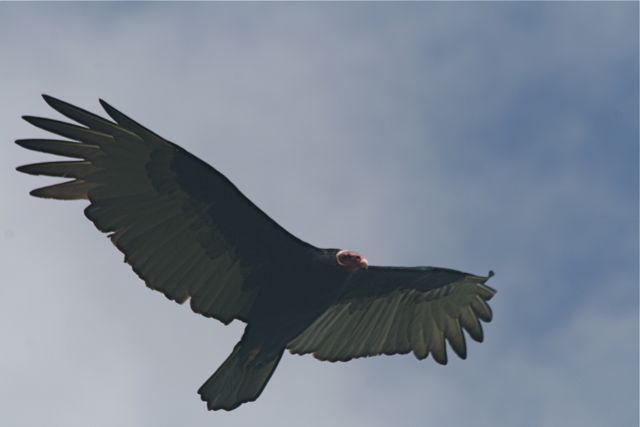
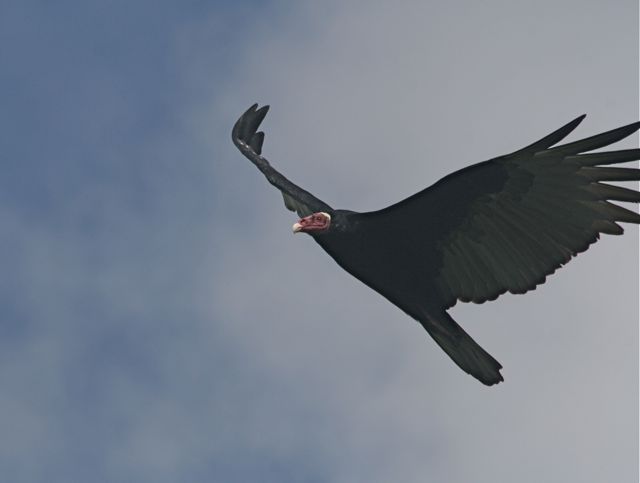
A turkey vulture (Cathartes aura) flew over nice and low, giving me a great contrast. Turkey vultures in South America are kind enough to be marked with a white nape!See how much flatter the turkey vulture's nostril profile is, than the lesser yellow-headed vulture's? Not to mention the TV's beef-red head.
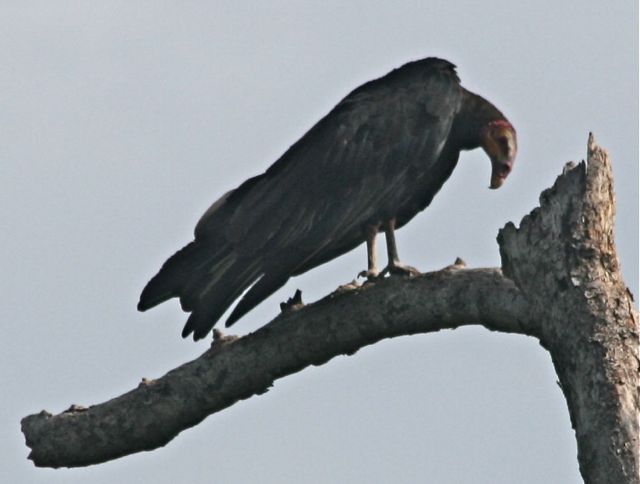
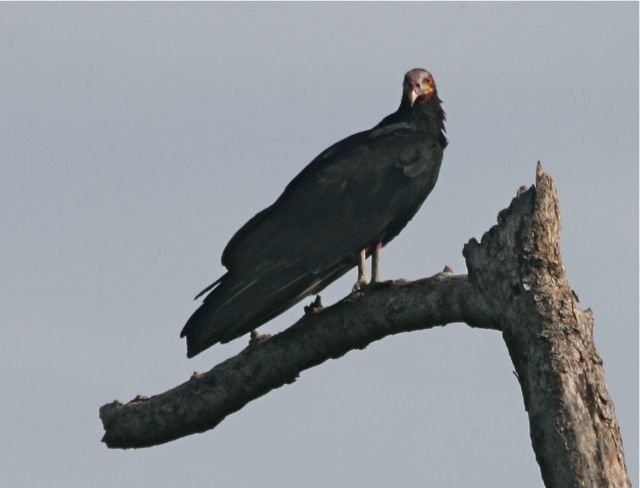
Lesser yellow-headed vultures are creatures of savanna and open marsh; their larger cousin, the greater yellow-headed vulture Cathartes melambrotus, lives in deep tall primary forest. We only got close to one fer-sure greater yellow-headed, and here it is (below). They're even blacker and glossier than lessers, and their heads are actually yellow instead of being tangerine/blue.
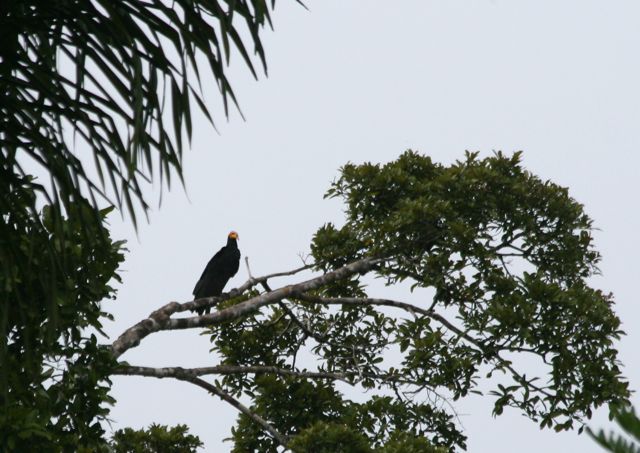
Oh, for a better look. That will have to wait until who knows when.

Wednesday, March 4, 2009

Rockview Lodge, Guyana


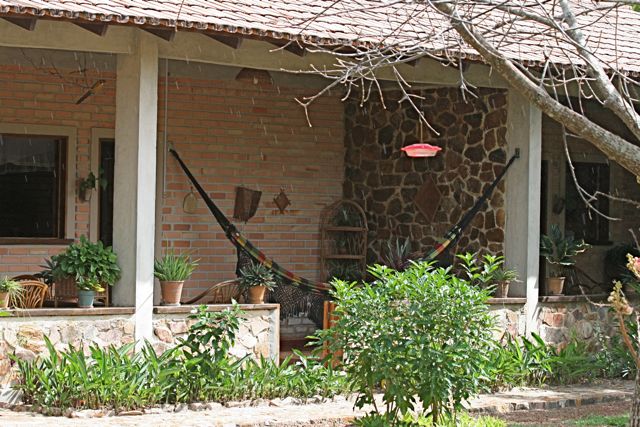
Of all the places we stayed in Guyana, Rockview Lodge probably has its ecotourism act most thoroughly together. It manages to be sustainable and alluring, even luxurious, at the same time. Terrific food--fresh okra and vegetables!--relaxing surroundings, even a pool.

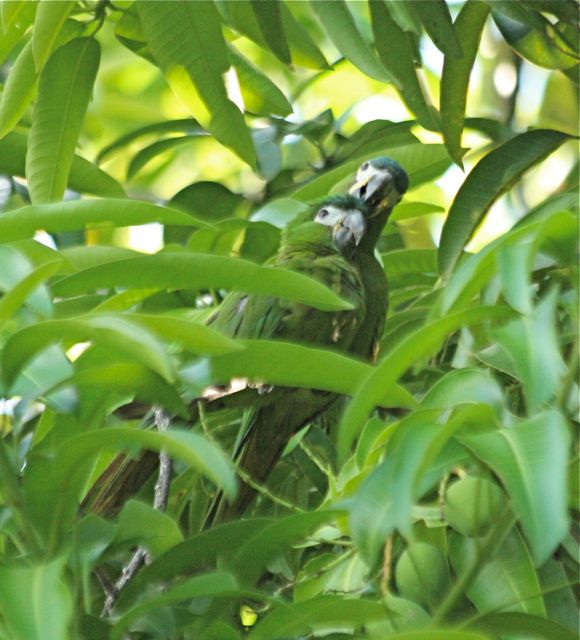
Of course, there were too many macaws in the mango trees for me to even think about a dip.
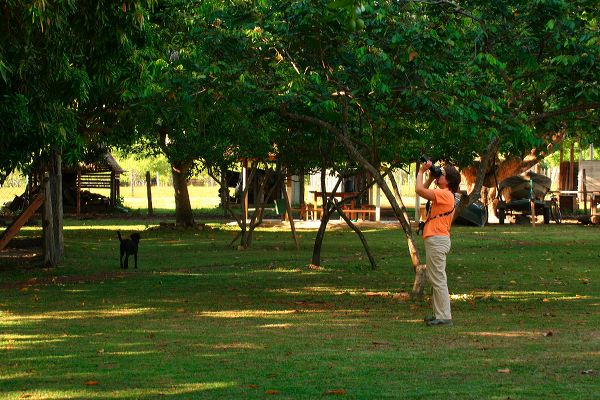
I spent what little downtime we had chasing birds and animals with my lens. Kevin Loughlin caught me with his. I was trying to lure them down with my mang0-orange shirt.

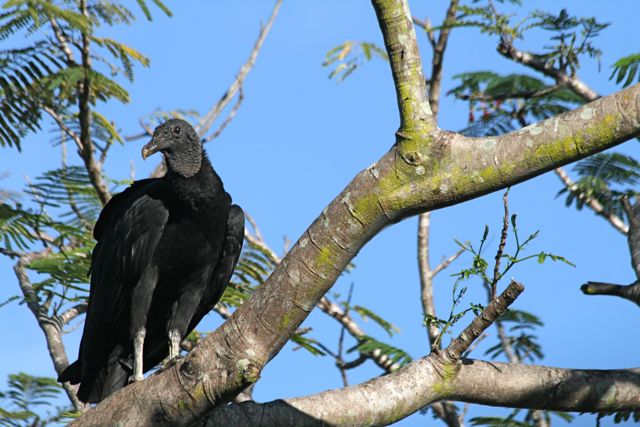
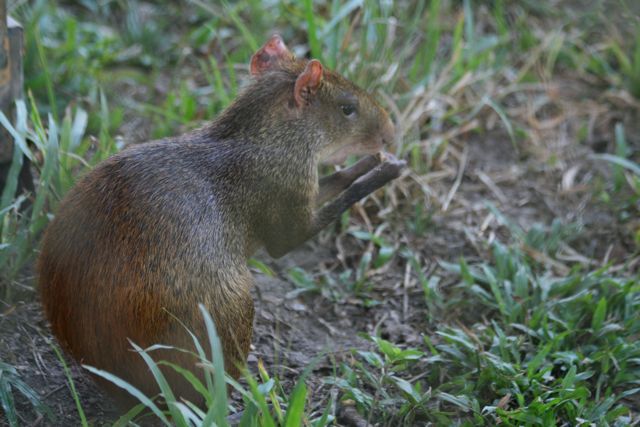
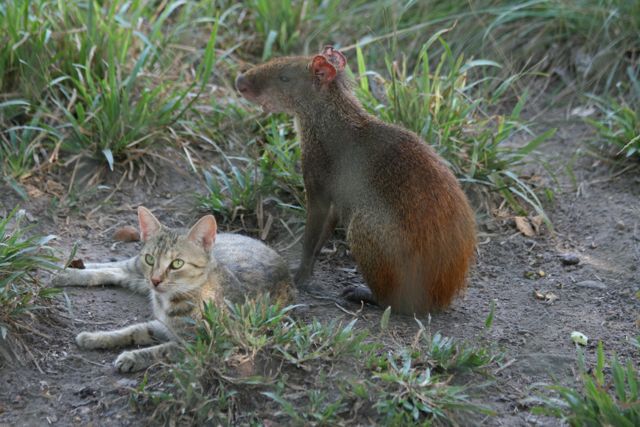
An obliging black vulture waited to scavenge some of the agouti's food in the small zoo on the lodge grounds. If memory serves, this is a red-rumped agouti, a species we saw in the wild, and a life mammal for me.
It was keeping company with a very pregnant kitteh, an odd couple among odd couples. Rodents and cats aren't traditional pals. Unless the rodent is cat-sized, and then it works, apparently.


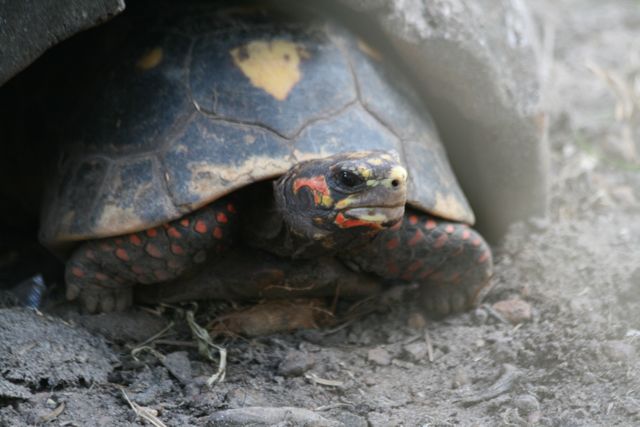
A red-legged tortoise shared the agouti enclosure.He's a big boy, about 2' long, like a box turtle gone wild.

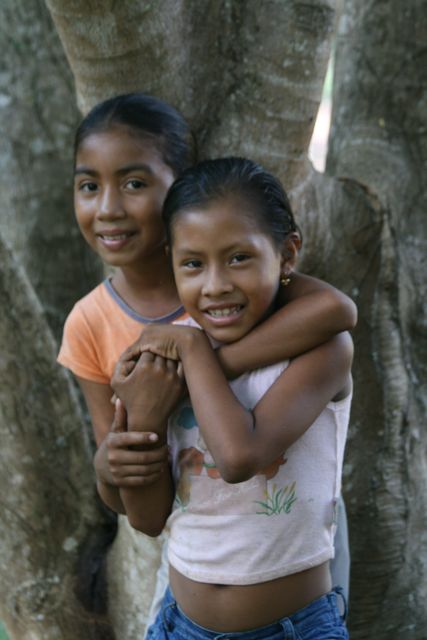
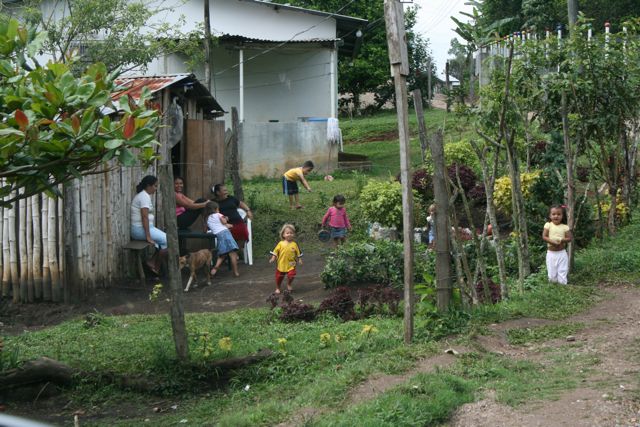
Because I was out and about so much, I attracted the attention of a couple of little girls whose parents work at Rockview. They followed my every move with great interest and lots of giggles. They loved looking over my shoulder as I sorted photos or emailed home, and they loved seeing the pictures I'd taken. Such beautiful little sprites; they were my buddies the whole time I stayed at Rockview.
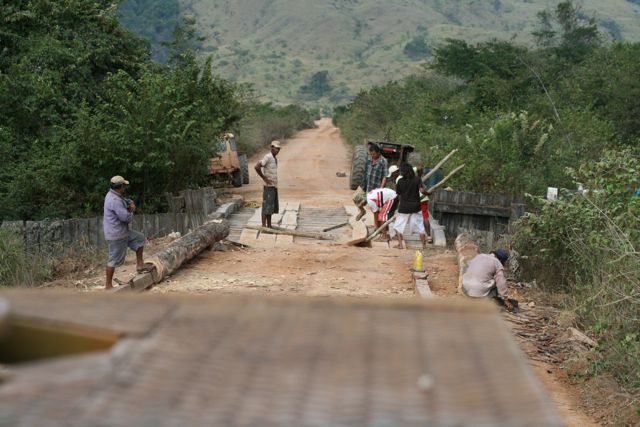
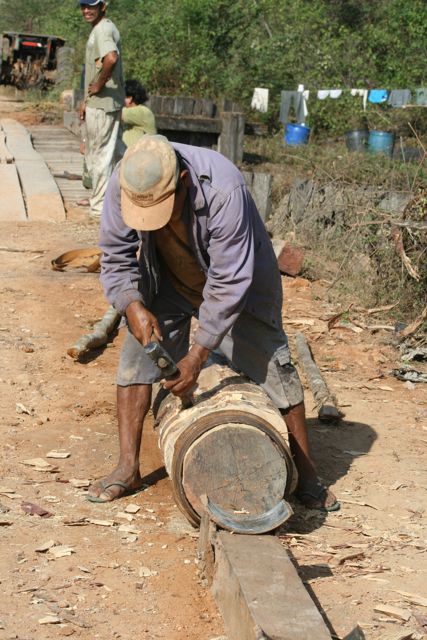
I was in awe of the people we met in Guyana. They work against tremendous odds, since the country has virtually no infrastructure. For instance, here's how a bridge is fixed when it goes out. A crew assembles, and lives in a plastic tarp covered open sided tent for the duration of the repair, which is not short. I can only imagine what that's like, given the chiggers and heat.


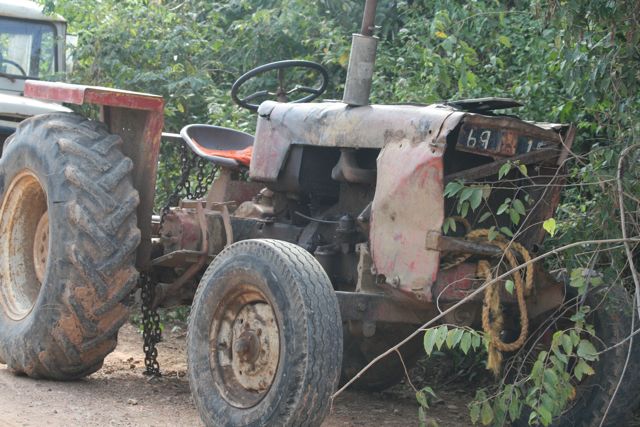
The road equipment makes our old Massey Ferguson tractor look like a DeLorean.

Trees are cut from the surrounding forest and hand-hewn to fit together.

And all of this at about 98 degrees, 80% humidity--so hot by 10 AM that I couldn't be out in the sun without feeling dizzy. Recession and all, we Americans truly do not know the meaning of deprivation. Guyana needs our tourism dollars. Think about spending yours there. Costa Rica's been done, and done, and done.

Tuesday, March 3, 2009

Happy Birthday, Bill Thompson!

Three words: fun, music, love. Arrange them any way you wish, but they still sum up Bill Thompson III. Usually, they overlap.

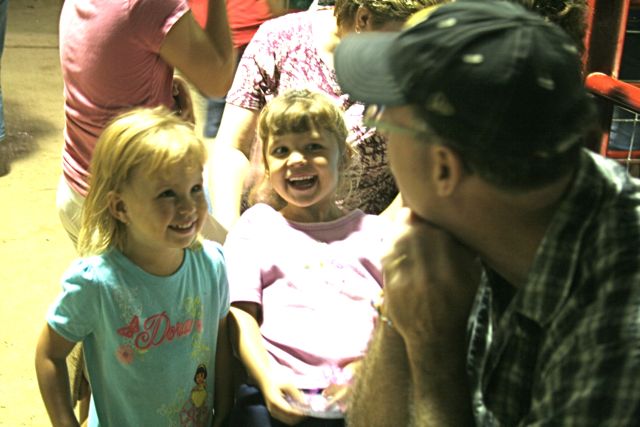
Everything is more fun with some BT3 added.He can make little girls laugh like nobody's business. Washington County Fair, Marietta, Ohio

He enjoys helping others see more birds and have more fun.

Whipple, Ohio, with a particularly porcine Chet Baker


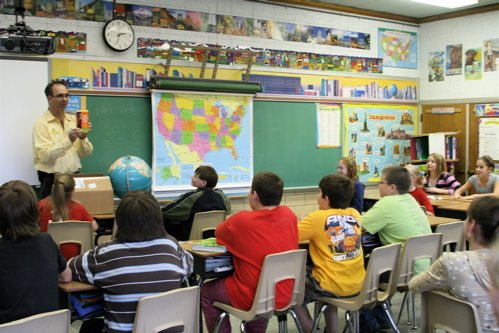
The Pied Piper of Birding: Bill brought a whole classroom along on the three-year journey to publishing his new book, The Young Birder's Guide to Eastern North America.

Perhaps you can pick out a beaming, proud Phoebe in the upper right corner

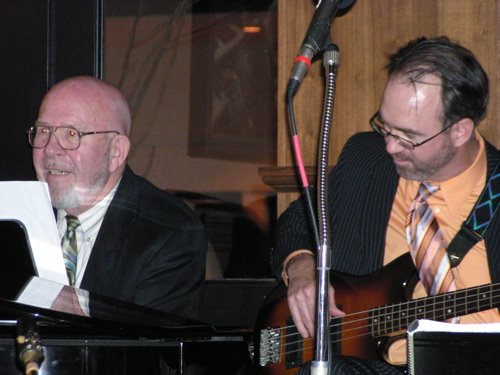
Comparatively few get to see Bill's musical side, but he plays every Sunday, and as often as he can with our band, The Swinging Orangutangs. Here he is with his dad, Bill Thompson Jr., an amazing jazz pianist.

Parkersburg, West Virginia

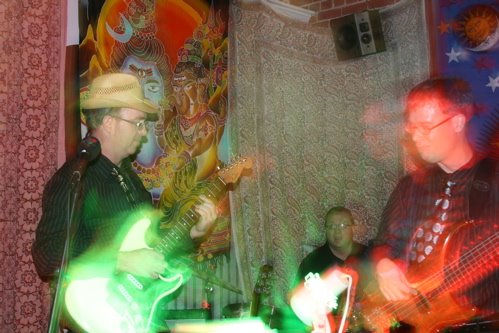
With the Swinging Orangutangs:
and shredding it up on Kremey Delight.
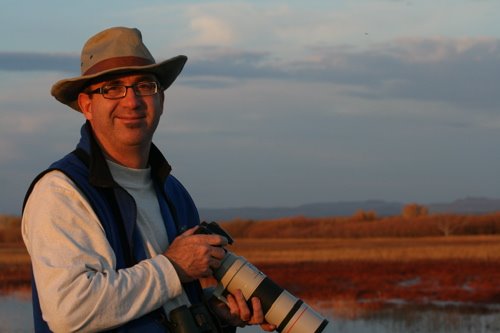
Photography has got him in its spell, whether he's shooting a quirky street sign or Giant Thing in Nebraska


or blasting harmlessly away at sandhill cranes in New Mexico.


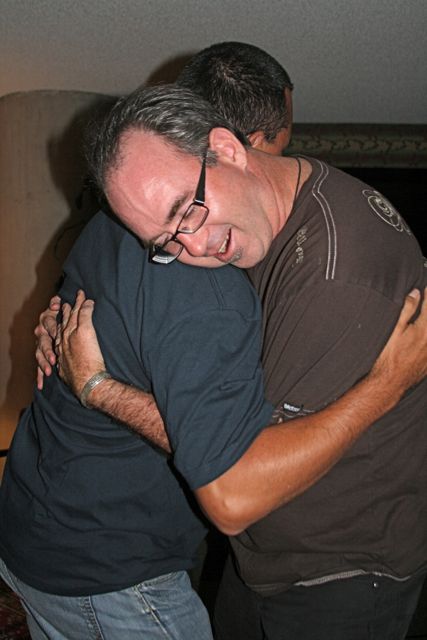
He is a GREAT slow dancer. Just ask Alvaro.

Snowbird, Utah
What happens at Snowbird stays at Snowbird, unless it finds its way onto a blog somewhere...

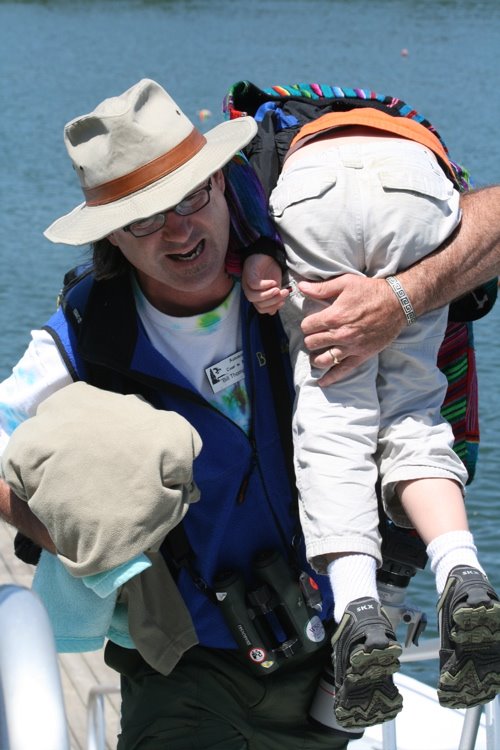
And as a daddy, he does what needs to be done.
Up the gangplank with a drowsy child. Hog Island, Maine

Magdalena, New Mexico

I feel lucky to be along for the ride. Happy birthday and Godspeed on your travels, Bill Thompson III. We love you more than you can know.

Monday, March 2, 2009

Under Tropical Skies


At the risk of giving you severe whiplash, I have to go back to Guyana now. I have loved being in Ohio for the winter; I think it has shown its best side, and sharing it with you has been a blast. But I need to remember Guyana, a once-in-a-lifetime experience, and share it, too, before the joyous riot of spring hits Ohio and I'm chasing down bright warblers in dappled woods. It is a life full of possibility and promise.

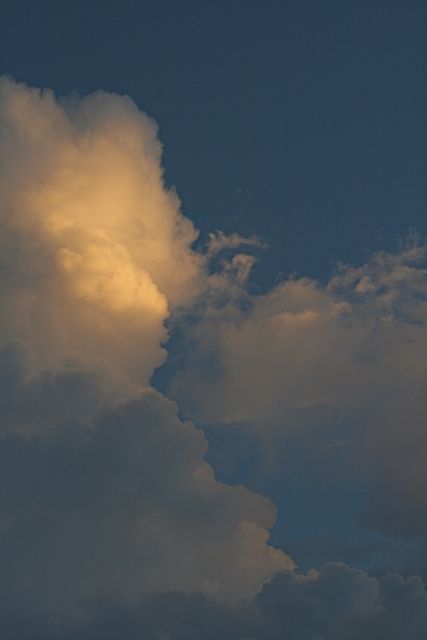
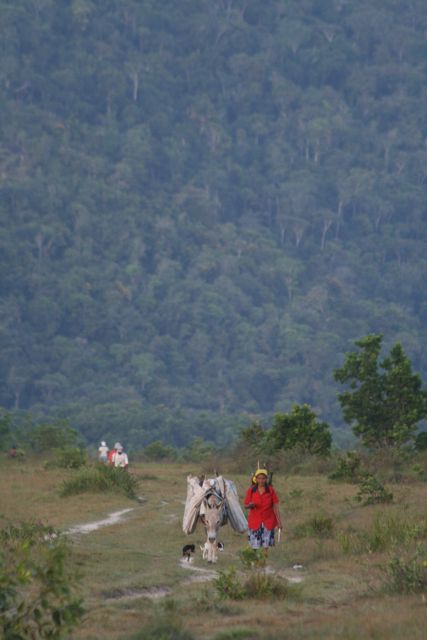
Having just exposed the many beauties of the ice and snow, I thought I'd show you a tropic sky that I expect never to see again. We were at at a delightful eco-resort not far from the Rupununi River, in the savannahs at the foot of a mountain range. Yes, there are mountains in Guyana; it's one of the reasons it's so diverse in flora and fauna. On an evening at Rockview Lodge, Kevin Loughlin, Mike Weedon, guide Luke Johnson and I took an easy stroll along the foothills of the Pakaraima Mountain Range.

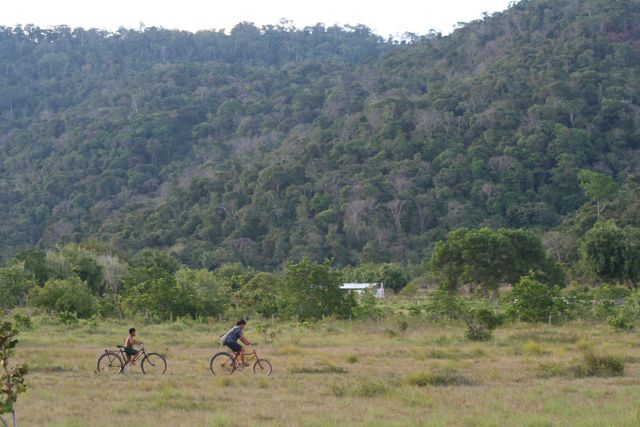
We were passed by a bicycle odd couple. Get a load of the wheels!
An ancient form of transport: burro.

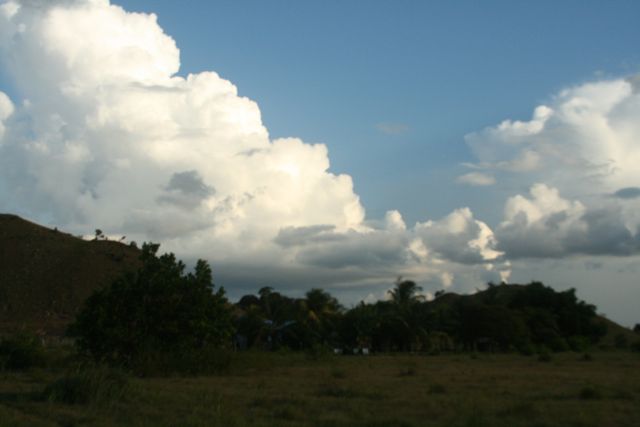
I tried so hard to capture the shadowed landscape and the towering thunderheads, but Kevin Loughlin patiently explained why my camera just couldn't do both. I had to pick either the sky or the landscape for my light reading. So I picked the sky.

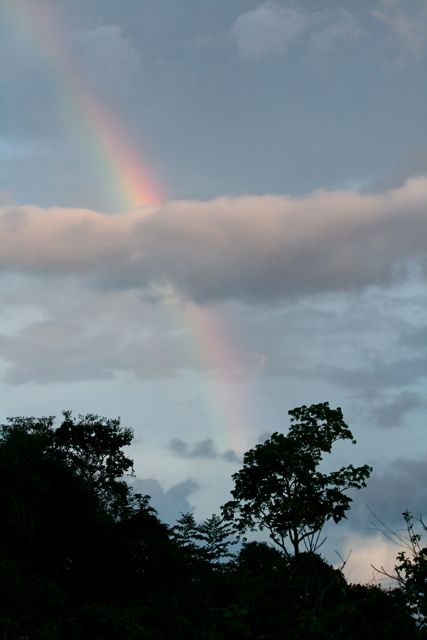
Even toward evening, it was hotter than Hades. I'm not used to sweating at sundown. But the sky made me forget my discomfort; everywhere I looked was a party. I look at this and almost expect a unicorn to stroll out of the trees.

But the best was around the corner. As we stood gaping at the changing cloud formations, a big flock of Nacunda nighthawks appeard out of nowhere, skimming low over the savanna. The Nacunda is a huge bird, paler below than any nightjar save the sand-colored. The light was far too low and the birds too swift for photos, but it was an experience I'll always remember, to be surrounded by them, almost ducking as they swept by.

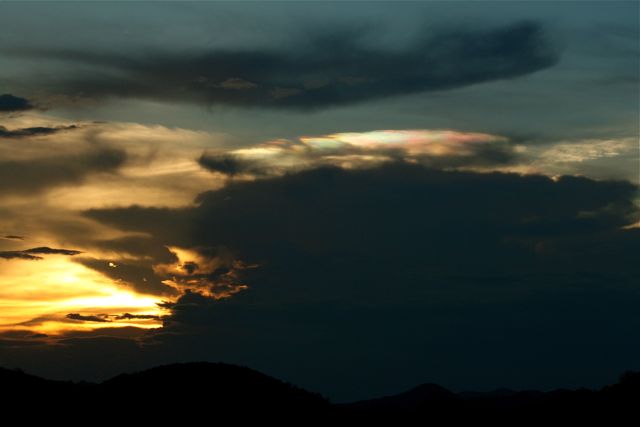
Looking up from the birds, I spotted something in the sky I wasn't sure I could be seeing.

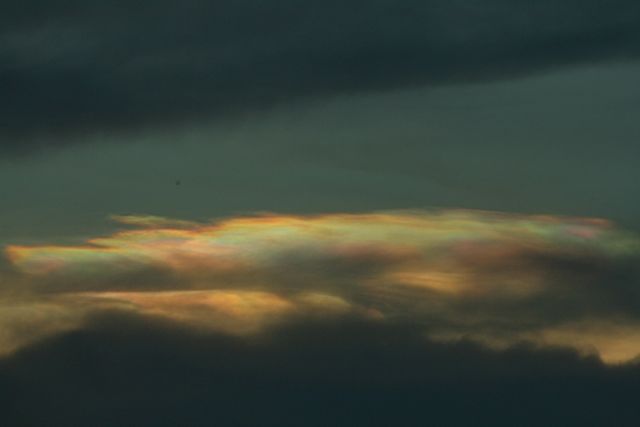
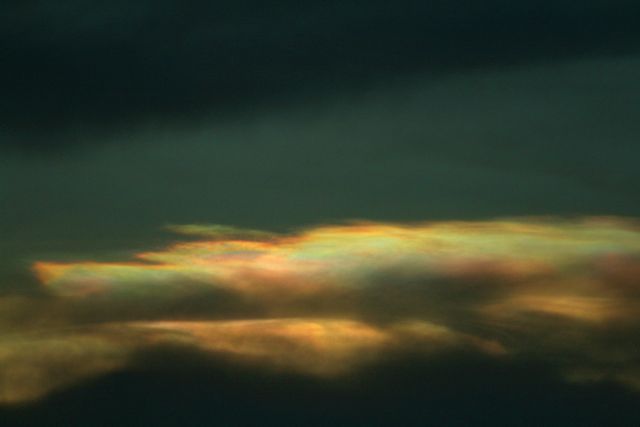
A hole had appeared in the cloud layer, a hole with colors of mother-of-pearl.


Iridescent pink, green, gold and blue shimmered and changed in evanescent waves. The only other place I've ever seen such hues are in the Northern Lights.

Perhaps these were the Southern Lights.

We walked back in near total darkness. When night falls near the equator, it falls with a clunk. I felt lucky to be alive, lucky to have seen the hues of a different rainbow in a place so far from home.

At the risk of ruining the mother-of-pearl glow of this post, I'm marooned at Pico Bonito Lodge in Honduras as we speak, plugged in, wishing it would stop raining but knowing it won't. Birding in this is like standing under a hose, bumbershoot weather. Maybe it's God's way of forcing me to check some birds off on the list, catch up with email, download some photos. Dunno, but when you've got three days left of a tropical birding trip, it's kind of a drag. Cotingas, denied! Still, it's warm and green and wet and very, very beautiful, and I'm sure many of y'all would prefer it to another durn Nor'easter. But it makes me miss my babehs.
Home Friday. Sigh. Somebody out there, part the clouds?

Sunday, March 1, 2009

A Doe Named Ellen

photo by Phoebe Linnea Thompson

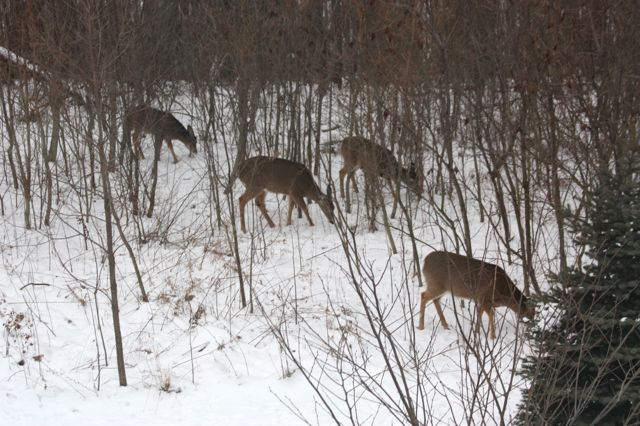
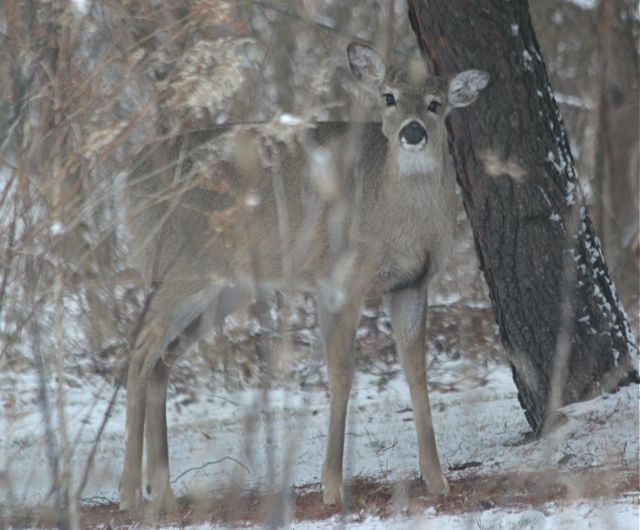
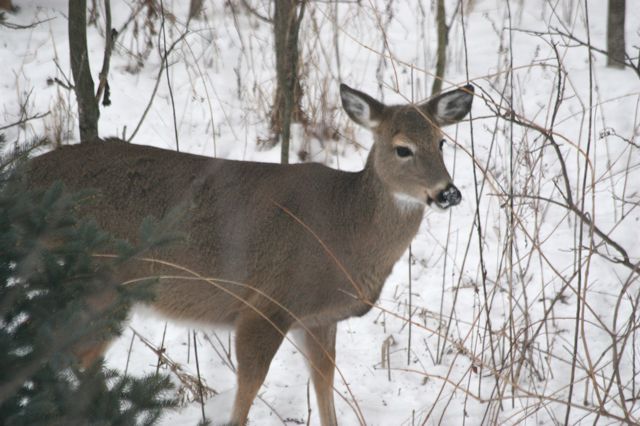
We have a lot of deer on our place, not least because we have our property posted against the seemingly endless hunting season. First there's bow season, then there's gun season, then there's muzzleloader season, and Bill always says that after that comes butterknife season.Still, they persist, though the big bucks all seem to magically disappear off our place, leaving only does and fawns. Hmm.

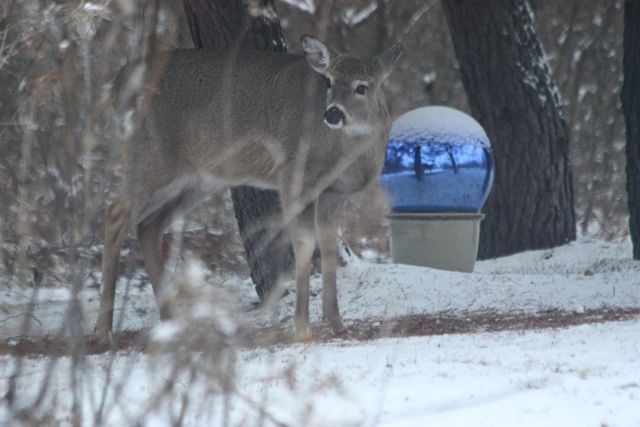
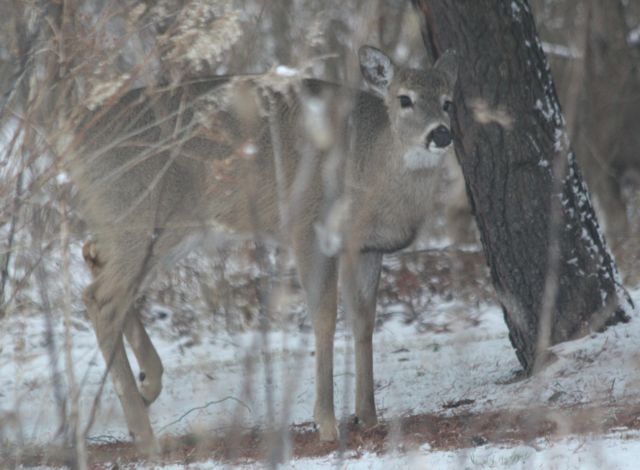
As an artist and naturalist, I am always looking for something in each animal that I observe, something I can use to distinguish it from its kind. It's in getting to know an individual that I learn the things that interest me most. So when a fawn came in for corn this winter and I got a chance to photograph her, I noticed something different about her.Photo by Phoebe Linnea Thompson

One ear was askew, but it was more than that. Something about her just didn't add up.
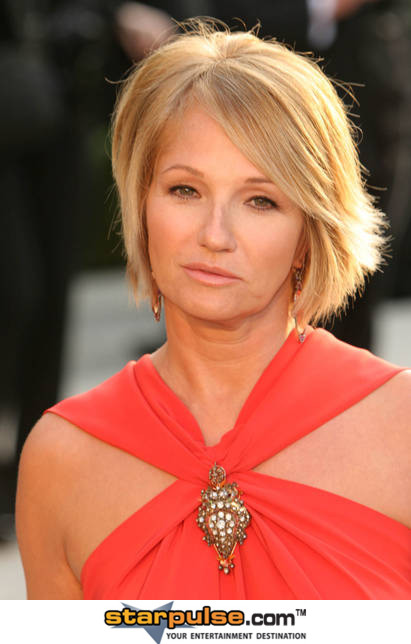
Have you ever noticed how Ellen Barkin is beautiful, even though her face has two distinct halves? Cover half of her face with your finger, and then cover the other.

Two different people. I think it makes her interesting, moreso than would perfect symmetry. It's as if one side is at peace, and the other a bit disgruntled. Gives her range other actresses would envy, depending on the camera angle, of course. Wait! That's my mad side.


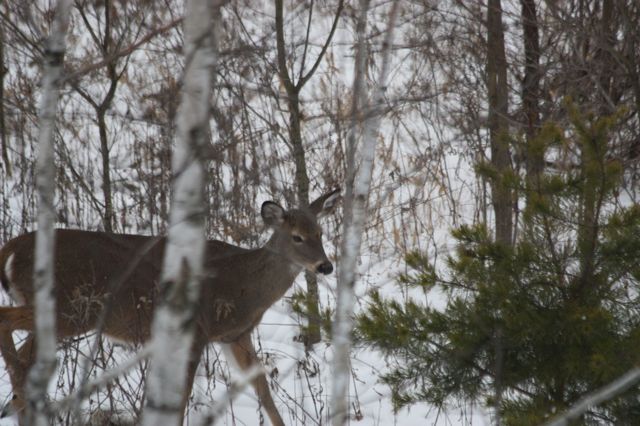
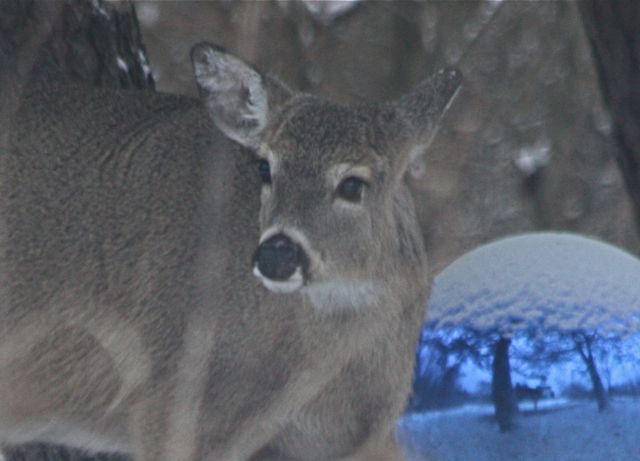
Zoom in, and you can see this fawn's left eye is lower than her right. And her left ear is canted sideways, and apparently stays that way. I'm thinking this might have been an injury in utero, or perhaps a birth defect. She's not perfectly symmetrical, but she seems to be coping all right.


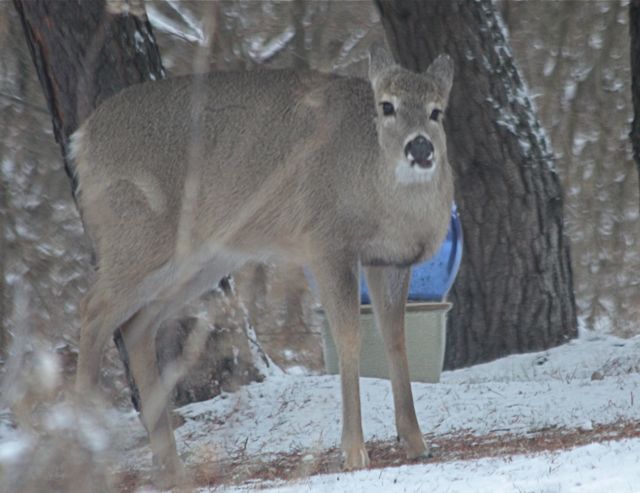
No ruminant looks quite right when she's chewing, but...Needless to say, I call her Ellen.